

Build a sustainable wardrobe: timeless, ethical fashion guide
Most of us own far more clothes than we actually wear. The average European wardrobe holds 125 to 173 items, yet roughly one in six garments never gets touched. That’s not just clutter. It’s a real environmental problem, and it’s one you can fix without sacrificing style. This guide walks you through every step of building a wardrobe that’s smaller, smarter, and genuinely sustainable. From auditing what you already own to choosing the right materials and caring for each piece, you’ll leave with a clear, practical plan.
Table of Contents
- Why build a sustainable wardrobe?
- Assess your current closet
- Choose sustainable materials and brands
- Build your capsule: Essential timeless pieces
- Care and maintenance: Making your clothes last
- Repair, upcycle, and responsible end-of-life options
- Take action: Sustainable wardrobe essentials, made easy
- Frequently asked questions
Key Takeaways
| Point | Details |
|---|---|
| Declutter for clarity | Start by auditing your current closet and letting go of unworn or unnecessary items. |
| Focus on quality staples | Invest in 30-50 timeless, versatile pieces to maximize outfits and minimize waste. |
| Choose better materials | Opt for organic, recycled, or certified materials and be vigilant about greenwashing. |
| Care to extend life | Proper washing, storage, and maintenance significantly extend clothing lifespan and sustainability. |
| Recycle and repair | Prioritize repair, upcycling, or responsible recycling to give worn-out items a second life. |
Why build a sustainable wardrobe?
Fast fashion has quietly reshaped how we think about clothing. Production volumes keep climbing while the average number of times we wear each item keeps dropping. The result is a system that burns through resources and generates enormous waste, all for garments that end up in landfills after just a few uses.
The good news is that your choices genuinely matter. Shifting toward slow and circular fashion can lower greenhouse gas emissions by 11 to 19 percent and reduce land use by up to 29 percent. That’s a meaningful impact from everyday decisions. Understanding sustainable fashion explained is the first step toward making those decisions with confidence.
Here’s what a sustainable wardrobe actually delivers:
- Less clutter and a clearer sense of personal style
- Lower carbon footprint through reduced purchasing and longer garment use
- Support for ethical labor and fair production practices
- Financial savings over time by buying fewer, better pieces
“The most sustainable garment is the one you already own and keep wearing.”
This isn’t about perfection. It’s about making more intentional choices, one item at a time.
Assess your current closet
Now that you know the why, start your wardrobe transformation with a frank audit of what you own. Pull everything out. Yes, everything. Lay it flat so you can actually see what you have.
Sort each item into one of four categories:
- Keep — Items you wear regularly and that fit well
- Repair — Pieces with minor damage worth fixing
- Donate — Good quality items you no longer need
- Recycle — Worn-out textiles that can’t be reused
As you sort, apply the 30 wears test. Ask yourself honestly: will I wear this at least 30 more times? If the answer is no, it belongs in the donate or recycle pile. 1 in 6 garments in European closets are never worn, and the average Dutch consumer buys 46 new items per year. Comparing your own numbers to that benchmark can be a real eye-opener.
| Closet metric | EU average | Your target |
|---|---|---|
| Total items | 125 to 173 | 30 to 50 |
| Unworn items | 1 in 6 | 0 |
| New purchases per year | 46 | Under 10 |
Once you’ve sorted, you’ll have a much clearer picture of what you actually need. Check out must-have sustainable outfits for inspiration on what a leaner, more intentional closet can look like.
Pro Tip: Take a photo of your sorted piles before putting anything back. Seeing the volume visually often motivates more decisive editing than just counting items.
Choose sustainable materials and brands
With a pared-down closet, focus on smart repurchasing with sustainable criteria. Not all fabrics are created equal, and not all brands that claim to be green actually are.

When it comes to materials, prioritize organic cotton, linen, hemp, Tencel, and recycled fibers over conventional synthetics. Virgin polyester and nylon shed microplastics with every wash and rely on fossil fuels. Recycled versions of these materials are a better option when you need performance fabrics for activewear.
| Material | Environmental impact | Best use |
|---|---|---|
| Organic cotton | Low water, no pesticides | Everyday basics |
| Linen / hemp | Very low impact | Warm weather, layering |
| Tencel (lyocell) | Closed-loop production | Soft everyday wear |
| Recycled nylon | Reduces plastic waste | Activewear, outerwear |
| Virgin polyester | High microplastic shedding | Avoid when possible |
Certifications are your best defense against greenwashing. Look for GOTS (Global Organic Textile Standard), Fair Trade, or OEKO-TEX labels rather than vague terms like “eco” or “vegan.” Knowing how to detect greenwashing in fashion protects you from paying a premium for marketing rather than genuine sustainability.
For a deeper breakdown of what to look for in brands and certifications, the ethical fashion guide covers the full picture.
Pro Tip: Before buying, search the brand name plus “GOTS” or “Fair Trade” to quickly verify whether their certifications are real and current.
Build your capsule: Essential timeless pieces
Once you’ve identified what needs replacing, intentionally shape your wardrobe’s new foundation. A capsule wardrobe is a small, curated collection where every piece works with multiple others, giving you far more outfit combinations than a stuffed closet ever could.
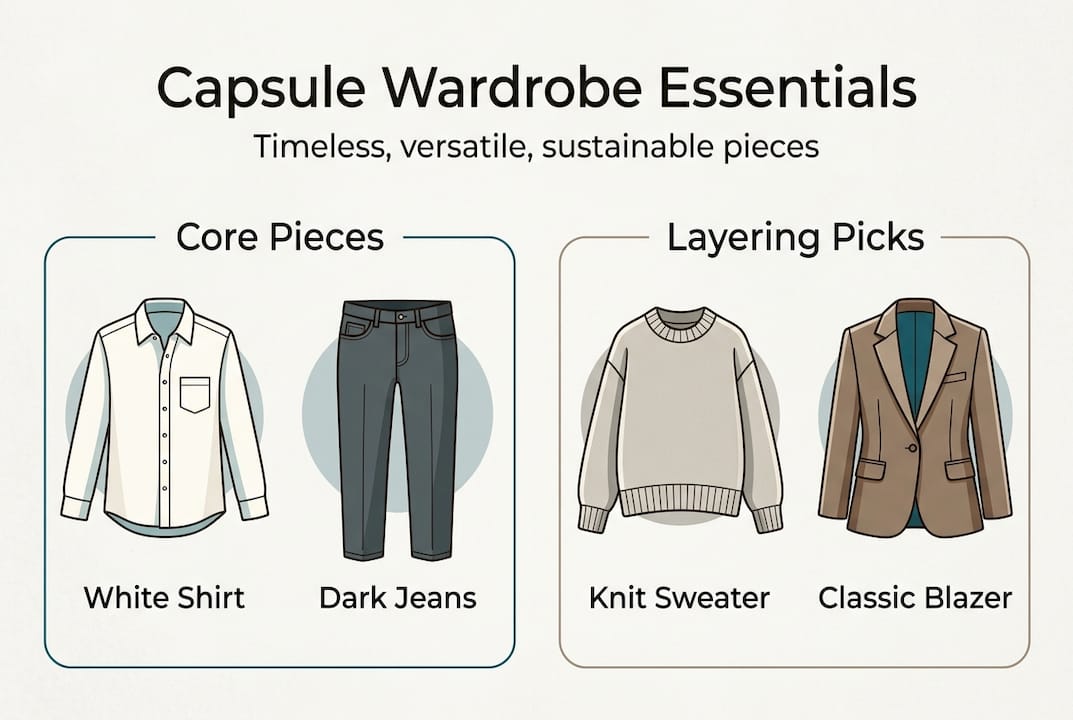
A well-designed capsule has 30 to 50 versatile pieces in neutral and complementary colors. That’s it. Thirty to fifty items that you actually love and wear regularly will outperform 150 items you feel indifferent about.
Here are the core staples worth investing in:
- A crisp white or natural-tone shirt in organic cotton
- A well-cut blazer or trench coat in a neutral shade
- One or two pairs of quality trousers or jeans built to last
- Knitwear in merino or recycled wool for layering year-round
- A few organic cotton tees in versatile colors
- A simple, functional dress that works across seasons
“Buy less, choose well, make it last.” This principle, often credited to Vivienne Westwood, is the backbone of every successful capsule wardrobe.
European style has always leaned toward quality over quantity. Timeless cuts, neutral palettes, and durable construction are the hallmarks of a wardrobe that doesn’t go out of fashion. If you practice yoga or need activewear, the yoga capsule wardrobe essentials guide shows how the same principles apply to performance clothing.
Care and maintenance: Making your clothes last
Maintaining your clothes is just as crucial as choosing them sustainably. The most eco-friendly garment is one that lasts ten years, not one that’s made from organic cotton but falls apart after six months.
Washing less, using cold water, and line drying preserves fabric integrity and significantly lowers energy use. Most clothes don’t need washing after every single wear. Air them out, steam them lightly, and spot clean when possible.
Here’s a practical care checklist:
- Wash at 30°C or lower whenever the label allows
- Turn dark garments inside out to prevent fading
- Use eco-friendly, concentrated detergents with no optical brighteners
- Skip the tumble dryer and air dry flat or on a hanger
- Store knitwear folded, not hung, to prevent stretching
- Mend small tears and loose buttons before they become bigger problems
Extending the life of a garment by just nine months reduces its carbon, water, and waste footprint by around 20 to 30 percent.
For a full breakdown of washing practices that protect both your clothes and the planet, the eco-conscious laundry guide is worth bookmarking.
Pro Tip: Keep a small sewing kit near your laundry area. Fixing a loose button takes two minutes and can add years to a garment’s life.
Repair, upcycle, and responsible end-of-life options
To close the sustainability loop, what you do with clothing at the end matters as much as your choices at the start. Consumption reduction has more impact than sorting alone, but when a garment truly reaches the end of its useful life, responsible disposal still matters.
Follow this order of priority:
- Repair — Fix tears, replace zippers, re-stitch seams. Minor damage is rarely a reason to discard.
- Upcycle — Transform worn jeans into shorts, old shirts into cleaning cloths, or scarves into bag straps.
- Donate — Good quality items that no longer fit your style can serve someone else well.
- Recycle — Truly worn-out textiles belong in a textile recycling bin, not general waste.
| End-of-life option | Best for | Where to go |
|---|---|---|
| Repair | Minor damage | Local tailor or DIY |
| Upcycle | Creative reuse | Home projects |
| Donate | Good condition items | Charity shops, clothing swaps |
| Textile recycle | Worn-out fabrics | In-store collection points |
Many European cities now have textile collection points in supermarkets, clothing stores, and community centers. Some brands also run take-back programs. For activewear specifically, the sportswear recycling steps guide walks you through the process in detail.
Pro Tip: Before donating, check that items are clean and wearable. Charity shops receive enormous volumes of unusable donations, which often end up in landfill anyway.
Take action: Sustainable wardrobe essentials, made easy
Armed with tips and strategies, the next step is finding pieces that actually live up to the standards you’ve set. That’s where thoughtful sourcing makes all the difference.

At m23.store, every piece is designed with longevity and ethics in mind. Produced in Berlin and Poland using certified organic cotton and recycled materials, the collections cover women’s wear, men’s wear, and children’s apparel built for real life and real seasons. There are no throwaway trends here, just functional, timeless clothing made under fair labor conditions. If you’re ready to start filling your capsule wardrobe with pieces you’ll actually keep, browse the sustainable outfit inspiration to see what a thoughtfully built wardrobe looks like in practice.
Frequently asked questions
How many items should a sustainable wardrobe have?
A functional capsule wardrobe typically consists of 30 to 50 versatile pieces in timeless styles and neutral colors. Quality and wearability matter far more than quantity.
Which fabrics are best for a sustainable wardrobe?
Favor organic cotton, linen, hemp, Tencel, and recycled fibers over most virgin synthetics. Each of these options carries a significantly lower environmental footprint across its lifecycle.
What is the most impactful step in sustainable fashion?
Buying less and using pieces longer delivers the greatest environmental benefit, outperforming recycling or simply switching to ethically labeled brands without reducing consumption.
How should I care for sustainable clothing?
Wash less often, use cold water, air dry, and repair garments promptly. These habits, outlined in detail in the sustainable fashion beginners guide, can double or triple the lifespan of most garments.
What are common greenwashing traps in sustainable fashion?
Vague labels like “vegan” or “eco” can mislead without any real backing. Always check for credible certifications such as GOTS, Fair Trade, or OEKO-TEX before trusting a brand’s sustainability claims.