

How to wash clothes sustainably: eco-conscious laundry guide
Your favorite organic cotton tee shrinks after three washes. A beautifully dyed linen shirt fades to a dull shadow of itself. These aren’t just laundry accidents — they’re the result of habits that quietly damage both your clothes and the planet. Every time you run a hot cycle on a full synthetic load, you’re releasing microplastics into waterways and burning energy that adds up fast. The good news is that a few deliberate changes to your laundry routine can protect your investment in ethical fashion, extend the life of every garment, and meaningfully reduce your environmental footprint. This guide walks you through exactly how to do that.
Table of Contents
- Why your laundry habits matter for sustainability
- What you need: Tools and essentials for eco-conscious laundry
- Step-by-step: The eco-conscious laundry process
- Spotting mistakes and troubleshooting your results
- Take the next step: Choose sustainable fashion that lasts
- Frequently asked questions
Key Takeaways
| Point | Details |
|---|---|
| Use cold water | Washing in cold water saves energy, minimizes fabric damage, and lowers environmental impact. |
| Wash less frequently | Reducing wash cycles helps clothing last longer and dramatically cuts microplastic pollution. |
| Choose natural fibers | Natural fiber garments shed fewer pollutants and often outlast synthetics with proper care. |
| Opt for eco-friendly tools | Use sustainable detergents and microplastic filters to further reduce laundry’s footprint. |
Why your laundry habits matter for sustainability
To see real change, it helps to understand exactly why eco-conscious laundry routines make a meaningful difference.
Every load you run has a hidden cost. Water, energy, detergent chemicals, and fiber loss all add up across hundreds of washes per year. Most people focus on what they buy, but how you care for clothes is just as important as choosing sustainable clothing care practices from the start.
Microplastic pollution is one of the most alarming consequences of conventional laundry. A single wash cycle can shed up to 700,000 microplastic fibers from synthetic garments, and those fibers flow directly into rivers and oceans. Natural fibers behave very differently, which is one of the key advantages of natural fibers that often goes unmentioned.
Energy use is the other major factor. Heating water accounts for 90% of a washing machine’s energy consumption per cycle. Switching to cold water can save between 38% and 62% of that energy compared to washing at 40°C. That’s a significant reduction from a single setting change.
The bottom line: Your laundry choices affect microplastic levels in the ocean, your household energy use, and how long your ethically made garments actually last. Small shifts in habit create real, measurable impact.
Here’s what conventional laundry habits typically cost you:
- Hot water cycles accelerate fabric breakdown and consume far more energy than necessary
- Frequent washing increases microplastic shedding and causes premature wear
- Tumble drying shrinks natural fibers and degrades elastic and shape
- Harsh detergents strip natural fiber coatings and reduce garment longevity
What you need: Tools and essentials for eco-conscious laundry
With the environmental stakes in mind, here’s what you need to build your greenest laundry routine.
The foundation starts with what’s already in your wardrobe. Garments made from natural fibers like organic cotton, linen, or Tencel shed far fewer microplastics than polyester or nylon blends. Choosing pieces that follow a guide to green textiles means your laundry routine starts with a lower environmental baseline. When you do need synthetics, a sustainable fabrics guide can help you identify which materials have the least impact.
Beyond fabric choice, a few key tools make a real difference:
| Standard setup | Eco-conscious alternative |
|---|---|
| Regular detergent | Plant-based, biodegradable detergent |
| Plastic laundry basket | Recycled or natural fiber basket |
| No microplastic filter | Guppyfriend washing bag or inline filter |
| Tumble dryer | Drying rack or outdoor clothesline |
| Hot wash default | Cold wash (30°C or below) as default |
| Half-full loads | Full loads only |
Pro Tip: A Guppyfriend washing bag or an inline microplastic filter attached to your machine’s drain hose can capture a significant portion of synthetic fibers before they reach the water supply. It’s one of the highest-impact purchases you can make for under €30.
Before you even start the machine, preparation matters. Follow these steps every time:
- Sort by fiber type: Keep synthetics separate from natural fibers when possible
- Check care labels: Every garment tells you its ideal temperature and handling
- Wait for a full load: Running half-empty machines wastes water and energy
- Pre-treat stains: Spot treatment reduces the need for aggressive wash cycles
- Turn dark items inside out: Preserves color and reduces surface friction
Prioritizing natural fibers over synthetics is one of the most effective ways to minimize microplastic shedding while also extending the life of ethically produced fashion.
Step-by-step: The eco-conscious laundry process
Now, let’s walk through each stage of an eco-conscious laundry process so you can replicate it at home.
-
Sort your load. Separate natural fibers from synthetics, and lights from darks. This prevents color transfer and lets you apply the right settings to each group. Synthetics go into a microplastic-catching washing bag before they enter the drum.
-
Pre-treat stains. Apply a small amount of eco-friendly stain remover or a paste of baking soda and water directly to the stain. Let it sit for 10 to 15 minutes. This eliminates the need for a second wash or a hotter cycle.
-
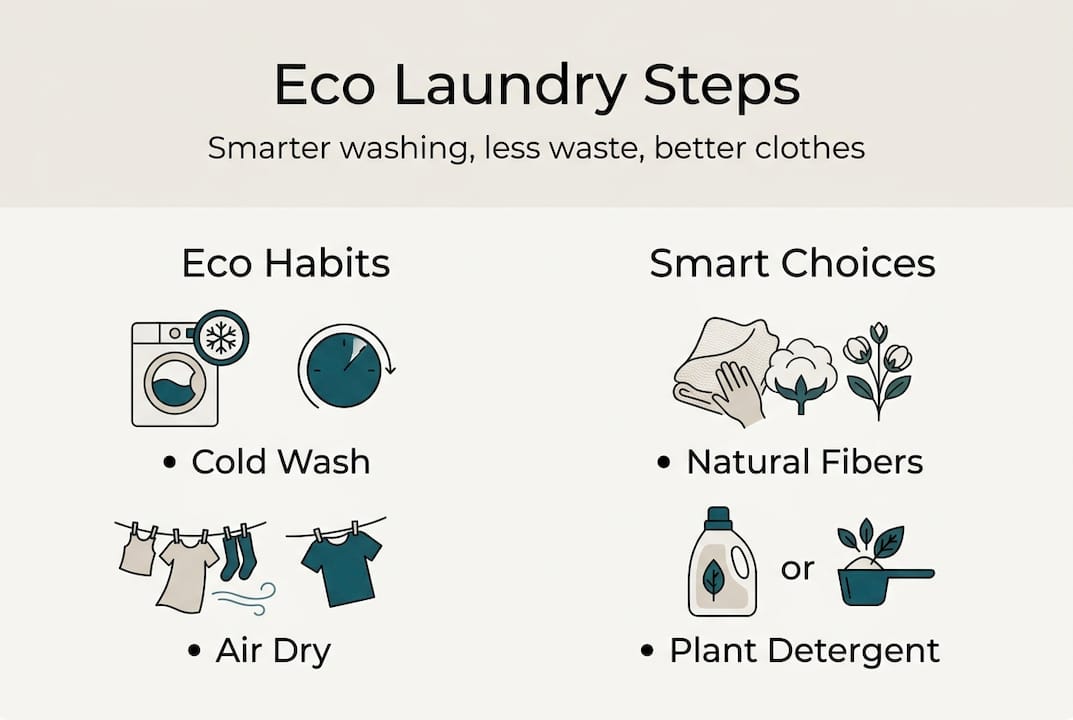
Select cold water. For the vast majority of everyday clothing, 30°C is more than sufficient. Cold washing preserves colors and garment shape far better than hot cycles, and it dramatically cuts your energy use. Modern detergents are specifically formulated to work at low temperatures.
-
Use the right amount of detergent. More detergent doesn’t mean cleaner clothes. Excess detergent leaves residue in fibers, attracts dirt faster, and requires extra rinse cycles. Follow the dosage on the label and use a concentrated, plant-based formula.
-
Run a full load. A half-empty machine uses nearly the same water and energy as a full one. Wait until you have enough laundry to fill the drum properly, without overpacking it.
-
Place synthetics in a washing bag. Before closing the machine, make sure any polyester or nylon items are inside a microplastic filter bag. This is a simple step that makes a measurable difference in fiber release.
-
Air dry whenever possible. Skip the dryer. Hang clothes on a rack or line, ideally in a well-ventilated space or outdoors. This preserves fabric structure, prevents shrinkage, and saves significant energy.
Pro Tip: Cold washing isn’t just better for the planet. It’s better for your clothes. Colors stay vibrant longer, elastic retains its stretch, and delicate weaves hold their shape wash after wash.
For items that genuinely need a hot wash at 60°C or above, such as towels, bedding, or items exposed to allergens, go ahead and use the higher temperature. But for the overwhelming majority of your wardrobe, cold water does the job just as well. Explore sustainable fabrics examples to understand which materials are most heat-sensitive and why.
If you’re building a wardrobe that’s designed to last, understanding the benefits of organic apparel will help you make smarter care decisions. And if you’re just starting out, the ethical fashion guide is a great place to connect your laundry habits to your broader purchasing choices.
Spotting mistakes and troubleshooting your results
Even the best intentions can stumble, so here’s how to course-correct and recognize eco-friendly laundry success.
The most common mistakes aren’t dramatic. They’re small habits that quietly undermine your efforts. Overwashing is the biggest one. Most garments don’t need to be washed after every single wear. Airing out clothes, spot cleaning, and using a fabric refresher spray between washes can dramatically reduce how often items go through a full cycle. Fewer washes means less microplastic shedding, less energy use, and longer-lasting clothes.
A single load can release up to 700,000 microplastic fibers from synthetic garments. Washing less frequently and using filter bags are two of the most effective ways to reduce that number.
Here’s a quick troubleshooting guide for the most common eco-laundry problems:
| Problem | Likely cause | Solution |
|---|---|---|
| Colors fading fast | Hot water or too-frequent washing | Switch to cold, wash less often |
| Clothes feel stiff | Too much detergent or hard water | Reduce detergent, add white vinegar to rinse |
| Garments shrinking | Hot wash or tumble drying | Cold wash only, air dry |
| Persistent odors | Not drying fully before storing | Air dry completely, don’t fold damp |
| Pilling on synthetics | Friction from mixed loads | Wash synthetics separately, use a bag |
To refresh clothes between washes without a full cycle, try these approaches:
- Air garments out after wearing, especially knitwear and denim
- Spot clean small marks with a damp cloth and mild soap
- Use a fabric refresher made from water and a few drops of essential oil
- Steam lightly to remove wrinkles and neutralize odors without water
You’ll know your eco-laundry routine is working when colors stay true wash after wash, garments hold their shape and fit, and fabrics feel soft rather than worn. For inspiration on building a wardrobe that responds well to these methods, browse sustainable outfit ideas that pair naturally with gentle care routines. Choosing pieces made from organic cotton also makes a noticeable difference in how well garments hold up over time.
Take the next step: Choose sustainable fashion that lasts
With your eco-conscious laundry process in place, you’re ready to make ethical, sustainable fashion choices part of your everyday life.
You now have everything you need to wash smarter, protect your garments, and reduce your environmental footprint with every load. But the most effective approach combines great laundry habits with clothes that are built to last in the first place.

At m23.store, we design and produce timeless apparel from certified organic cotton and recycled materials, made fairly in Berlin and Poland. Every piece is created to be worn for years, not seasons. Pair that with the care practices in this guide and you have a genuinely sustainable wardrobe. Explore our full range and read more about eco-friendly fabrics to find pieces that reward the effort you’re already putting into conscious care.
Frequently asked questions
Why is cold water washing better for the environment?
Cold water washing uses dramatically less energy because 90% of a machine’s energy goes into heating water, and modern detergents clean effectively at 30°C without the extra heat.
How can I prevent my clothes from shedding microplastics?
Wash synthetic garments less often, use cold water cycles, and place them in a filter bag or use an inline drain filter, since one load can shed up to 700,000 microplastic fibers.
Do I ever need to use hot water for laundry?
Hot washes at 60°C or above are only necessary for towels, bedding, or items that need allergen removal. For everyday clothing, cold water is sufficient.
Is air drying clothes always better than using a dryer?
Air drying saves energy, prevents shrinkage, and reduces fabric wear, making it the most eco-friendly option for nearly every garment type whenever space and weather allow.