

How to choose recycled fabric apparel ethically
TL;DR:
- Trust certifications like GRS and OEKO-TEX to verify genuine recycled content and safety standards.
- Choose suitable recycled fabrics based on your needs, balancing performance, durability, and environmental impact.
- Be skeptical of greenwashing and prioritize durability, fit, and timeless design for long-lasting eco-friendly wardrobe pieces.
Shopping for recycled fabric apparel sounds straightforward until you’re standing in front of a rack of “eco” labels and have no idea which ones actually mean something. Certifications overlap, buzzwords multiply, and brands that genuinely care look almost identical to those that don’t. European eco-conscious shoppers face a real challenge: the recycled fashion market is growing fast, but so is the noise around it. This guide cuts through that confusion. You’ll learn which certifications to trust, how to compare recycled fabrics, how to spot greenwashing, and why durability is the most underrated sustainability metric of all.
Table of Contents
- Understand key recycled fabric certifications
- Choose the right recycled fabric for your needs
- Spot greenwashing and assess real sustainability
- Prioritize durability, fit, and timeless design
- Our perspective: What most eco-fashion guides miss
- Find certified recycled fashion at M23
- Frequently asked questions
Key Takeaways
| Point | Details |
|---|---|
| Trust recognized certifications | Look for GRS, OEKO-TEX, GOTS, and EU Ecolabel for genuinely sustainable recycled apparel. |
| Match fabric to your needs | Recycled polyester offers durability, while recycled cotton is ideal for softness and casual wear. |
| Beware of greenwashing | Always check for full supply chain transparency, not just recycled material claims. |
| Choose for longevity | Prioritize durable, timeless designs to maximize sustainability and minimize waste. |
Understand key recycled fabric certifications
Certifications are your first filter. They exist because “recycled” on a tag tells you almost nothing on its own. A garment could contain 10% recycled content, be dyed with harmful chemicals, and be stitched together in unsafe conditions, and still legally carry that word. Certifications fix that problem by setting minimum standards and verifying them through third-party audits.
Here are the four certifications that matter most for European eco-shoppers:
- GRS (Global Recycled Standard): Verifies that a garment contains genuine recycled content and that the entire processing chain meets ethical, environmental, and chemical safety requirements. As Textile Exchange confirms, GRS covers social criteria including no child labor and safe working conditions.
- OEKO-TEX Standard 100: Confirms that every component of the finished garment, including threads and buttons, has been tested for harmful substances.
- GOTS (Global Organic Textile Standard): Relevant when recycled fibers are blended with organic ones. It covers both environmental and social criteria across the full supply chain.
- EU Ecolabel: A European Union certification that sets strict ecological and performance standards, making it especially relevant for shoppers in Europe.
For recycled fabric apparel specifically, GRS for recycled content paired with OEKO-TEX gives you the strongest combination. GRS confirms the recycled claim and the ethics behind it. OEKO-TEX confirms the finished product won’t harm your skin or the environment during use.
“Prioritize GRS for recycled content traceability and ethical processing. When a garment carries GRS, you know the recycled claim has been independently verified at every stage of production, not just at the raw material level.”
Use this quick checklist before buying:
| Certification | What it verifies | Best for |
|---|---|---|
| GRS | Recycled content + ethics + environment | All recycled apparel |
| OEKO-TEX 100 | No harmful substances in finished product | Skin-contact garments |
| GOTS | Organic + recycled blends, full supply chain | Mixed-fiber items |
| EU Ecolabel | European ecological and performance standards | European market shoppers |
If you want to go deeper on what makes a brand genuinely responsible beyond certifications, the fashion ethics guide and the step-by-step ethical fashion resource are both worth reading before your next purchase.
Choose the right recycled fabric for your needs
After knowing which certifications to trust, it’s time to look at the fabrics themselves. Not all recycled textiles perform the same way, and choosing the wrong one for your lifestyle can undermine your sustainability goals.
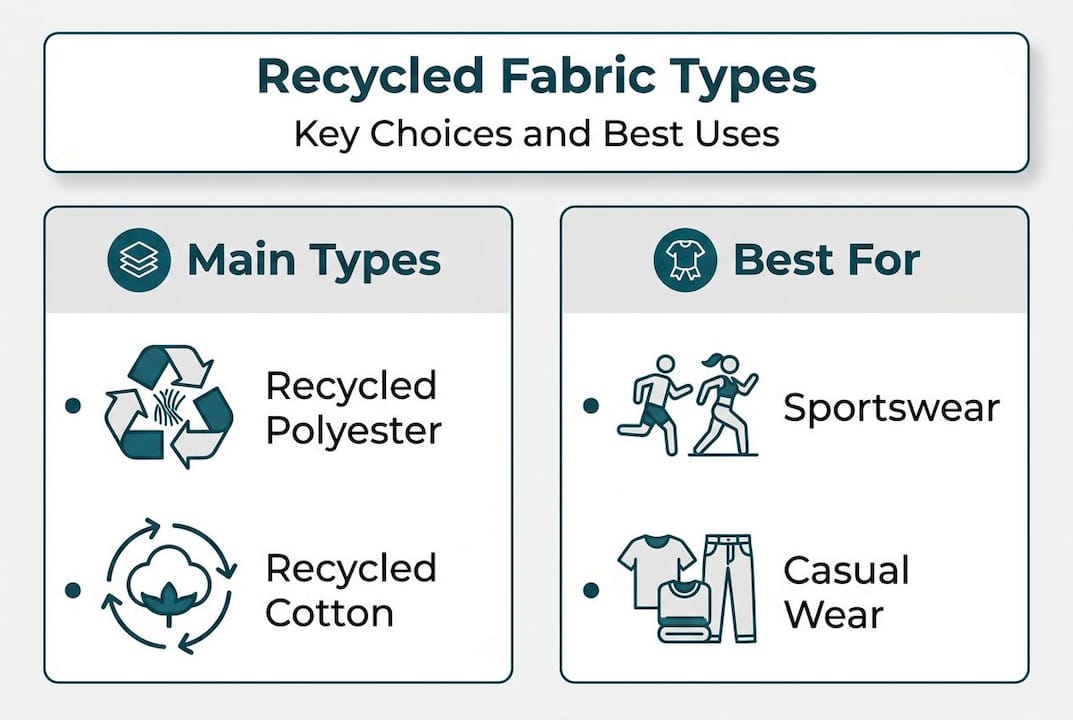
Recycled polyester (rPET) is made primarily from plastic bottles and post-consumer plastic waste. It’s durable, moisture-wicking, and holds its shape well, making it ideal for activewear, outerwear, and bags. The trade-off is microplastic shedding: every wash releases tiny synthetic fibers into waterways. Using a microplastic filter bag helps, but it doesn’t eliminate the issue entirely.
Recycled cotton is softer, breathable, and biodegradable, making it a strong choice for everyday wear, t-shirts, and casual layers. It tends to have shorter fiber lengths than virgin cotton, which can affect durability slightly, but blending with a small percentage of other fibers addresses this. Life cycle assessment research shows recycled polyester generally has a lower global warming potential than virgin polyester, but the microplastics issue is real; recycled cotton has a lower climate impact than virgin cotton, though post-consumer recycled cotton can score higher in some environmental categories than post-industrial recycled cotton.
Recycled blends combine two or more recycled fibers to balance performance and comfort. They’re versatile but come with a re-recyclability problem: blended fabrics are much harder to separate and recycle again at end of life.
Here’s a quick comparison to guide your choice:
| Fabric | Best use | Climate impact | Re-recyclability |
|---|---|---|---|
| Recycled polyester (rPET) | Activewear, outerwear | Lower than virgin | Moderate |
| Recycled cotton | Casual wear, basics | Lower than virgin | Good (pure) |
| Recycled blends | Versatile everyday wear | Varies | Limited |
How to choose based on your priorities:
- For performance and outdoor use: Choose rPET with a microplastic filter strategy.
- For everyday comfort and breathability: Choose recycled cotton, ideally GRS-certified.
- For versatility: Choose blends carefully, knowing they may not be recyclable again.
- For long-term circularity: Prioritize single-fiber recycled garments over blends.
- For skin sensitivity: Pair any choice with OEKO-TEX certification.
Pro Tip: If you’re building a capsule wardrobe, start with recycled cotton basics and add rPET pieces only where performance is genuinely needed. This keeps your wardrobe flexible without over-committing to synthetics. For more ideas, sustainable outfit ideas and building a sustainable wardrobe offer practical starting points. You can also explore biodegradable alternative fabrics if you want options beyond recycled synthetics.
Spot greenwashing and assess real sustainability
Once you’ve chosen promising fabrics, it’s critical to recognize which brands or products are truly sustainable, not just making bold claims. Greenwashing is more sophisticated than it used to be. It’s no longer just a green leaf logo on a fast-fashion tag. Today it shows up in carefully worded marketing language that sounds meaningful but commits to nothing.
Watch for these red flags:
- Vague claims like “eco-friendly,” “green,” or “sustainable” with no certification or data to back them up
- “Made with recycled materials” without specifying the percentage of recycled content
- Sustainability pages that discuss goals and commitments but show no third-party verification
- Highlighting one green attribute (like packaging) while ignoring the rest of the supply chain
- Certifications you can’t verify independently or that are self-issued
The textile sustainability knowledge base makes an important point: blends limit re-recyclability, synthetics shed microplastics, and post-consumer recycling often requires more energy than post-industrial recycling. Verifying the full supply chain, not just the material, is what separates genuine sustainability from surface-level marketing.
Pro Tip: When a brand uses the word “conscious” or “responsible” without linking to a specific certification or audit report, treat it as a prompt to dig deeper, not a reason to trust them more.
Genuine transparency looks like this: published supplier lists, third-party audit results, clear recycled content percentages, and named certifications with license numbers you can check. Brands that are doing the work tend to show it. Those that aren’t tend to talk around it.

For more context on how to approach this critically, recycling sportswear tips and 2026 sustainable trends both cover how the industry is evolving and what to watch for.
Prioritize durability, fit, and timeless design
After confirming apparel’s sustainability, focus on longevity and versatility to maximize its eco impact. The most sustainable garment is the one you actually wear for years, not the one with the most certifications that sits unused in your closet.
Durability is a sustainability metric. Every time you replace a garment, you trigger a new production cycle with its own water use, energy consumption, and emissions. A well-made recycled cotton shirt worn 200 times has a dramatically lower per-wear environmental footprint than a cheaper version worn 20 times.
Here’s how to assess quality before you buy:
- Check the stitching: Look for tight, even stitches at seams and stress points like pockets and cuffs.
- Test the fabric weight: Heavier fabric generally holds shape and resists pilling better over time.
- Examine the finish: Fraying edges, loose threads, or uneven dye are early signs of poor construction.
- Assess the fit: A garment that fits well is one you’ll actually wear. Poor fit leads to abandonment.
- Look for seasonless design: Neutral colors, clean lines, and classic silhouettes stay relevant across years and trends.
Timeless design is not just an aesthetic preference. It’s a practical sustainability tool. Fast-fashion trends are designed to expire. Timeless pieces are designed to last.
Things to prioritize when evaluating a garment:
- Reinforced stress points (knees, elbows, cuffs)
- Colorfast dyes that won’t fade after a few washes
- Certifications like GRS and OEKO-TEX that signal quality alongside ethics
- Brands that offer repair services or take-back programs
Pro Tip: Invest in three to five genuinely versatile pieces rather than ten trendy ones. A recycled cotton crewneck in a neutral tone can anchor dozens of outfits across seasons. The sustainable wardrobe guide walks through exactly how to build that kind of foundation.
Our perspective: What most eco-fashion guides miss
With the actionable steps in hand, let’s look at what even the best eco-fashion advice tends to overlook. Most guides treat sustainable fashion as a checklist. Get the right certifications, pick the right fabric, avoid greenwashing, done. But real sustainability is more personal than that.
There is no single best recycled fabric for everyone. As life cycle assessment research confirms, the right choice depends on use: rPET for performance and durability, recycled cotton for casual wear, and always checking LCA impacts beyond just carbon. Your lifestyle, your local climate, how often you wash your clothes, and how long you realistically keep them all shape which choice is actually the most sustainable for you.
We also think the industry undervalues skepticism. Eco-conscious shoppers are often so motivated to do the right thing that they accept green claims too readily. Healthy skepticism isn’t cynicism. It’s what keeps brands accountable. Ask hard questions. Demand license numbers for certifications. Read the small print.
Progress over perfection is the frame that actually works long-term. You won’t always find the ideal garment. Sometimes the most ethical choice is simply buying less and wearing what you already own. Explore ethical fashion responsibility for a broader look at how personal choices connect to systemic change.
Find certified recycled fashion at M23
Ready to put these strategies into action? At M23, every piece in the collection is selected with exactly these criteria in mind: verified certifications, recycled and organic materials, ethical production in Berlin and Poland, and designs built to last across seasons.

You don’t have to spend hours researching every garment. M23 does that work for you, curating apparel that meets real sustainability standards, not just marketing ones. Whether you’re starting your first sustainable wardrobe or refining one you’ve built over years, you can browse with confidence. Check out the latest sustainable trends to see what’s worth adding to your wardrobe right now.
Frequently asked questions
What is the GRS certification, and why is it important?
GRS ensures garments contain genuine recycled content and are produced under ethical, safe conditions with no child labor, verified at every stage of the supply chain.
Is recycled polyester always more eco-friendly than new polyester?
Recycled polyester has a lower global warming potential than virgin polyester, but it still sheds microplastics and isn’t the best choice for every garment type.
How do I avoid greenwashing when shopping for recycled fabric apparel?
Look for named, verifiable certifications and published supply chain data; verify the full supply chain, not just the material claim on the label.
Are blends of recycled fibers a good choice?
Blends limit re-recyclability at end of life, so single-fiber recycled garments are the stronger long-term choice when available.
Does durable design really make a difference?
Absolutely. Prioritizing durability reduces how often garments need replacing, which directly lowers your overall environmental footprint over time.