

Organic clothing care tips for a longer-lasting wardrobe
TL;DR:
- Gentle, cold washing, air drying, and proper storage significantly extend organic clothing lifespan.
- Responsible care practices reduce environmental impact and support a circular, sustainable wardrobe.
- Prioritizing maintenance over replacement is key to sustainable fashion and resource conservation.
Buying organic clothing is one of the most meaningful choices you can make for the planet, but the real sustainability payoff only comes when those garments actually last. Too many eco-conscious shoppers invest in certified organic pieces, then accidentally shrink them, fade them, or wear them out years too soon through rough washing and careless storage. The good news is that a handful of practical care habits, each requiring almost no extra time or money, can dramatically extend the life of every organic piece you own, keep your wardrobe genuinely circular, and reduce your environmental footprint far beyond the original purchase.
Table of Contents
- Understand the basics: Why organic clothing needs special care
- Washing organic clothing: Eco-conscious methods that work
- Drying and storing organic clothing: Sustainable strategies for longevity
- Comparison: Sustainable care vs. conventional methods
- Why gentle, mindful clothing care truly matters for the planet
- Eco-conscious style: Your next step toward a greener wardrobe
- Frequently asked questions
Key Takeaways
| Point | Details |
|---|---|
| Wash less, wash cool | Washing only when needed and in cold water saves energy, extends garment life, and reduces your eco-footprint. |
| Gentle drying and storage | Air drying and using breathable bags protect organic fabrics from stretching, fading, and pests. |
| Repair and spot clean | Spot cleaning with natural products and repairing small issues increase sustainability and clothing lifespan. |
| Choose certified care | Always follow label instructions for GOTS-certified garments to maintain integrity and minimize shrinkage. |
Understand the basics: Why organic clothing needs special care
Organic clothing is not simply a marketing label. It refers to garments made from fibers grown without synthetic pesticides, herbicides, or genetically modified seeds, and processed without toxic dyes or chemical finishes. The most trusted benchmark in this space is GOTS certification. GOTS requires 95%+ organic fibers and explicitly bans toxic chemicals at every stage of the supply chain, from the farm to the finished garment hanging in your wardrobe.
Because organic fabrics skip the harsh chemical treatments that conventional textiles rely on for shape retention and wrinkle resistance, they are more naturally reactive to heat, friction, and aggressive detergents. That is not a flaw. It is a feature, because those same chemical finishes are what make conventional clothes rigid, prone to microplastic shedding, and ultimately difficult to recycle. Organic fibers breathe, move, and age gracefully, but only when you treat them with the care they deserve.
Understanding the role of organic fabrics in a truly sustainable wardrobe helps you see why daily care decisions matter so much. The European Union’s circular economy strategy makes this explicit. Prioritizing gentle, low-energy care extends garment life, reduces waste, and directly supports the EU’s circular textile goals, which aim to make textiles durable, repairable, and recyclable by design.
Here are the four core maintenance principles every owner of organic clothing should internalize:
- Wash gently and infrequently. Reduce fiber stress and water consumption at the same time.
- Use low temperatures. Cold water protects fabric structure and cuts energy use significantly.
- Store thoughtfully. Breathable storage prevents mold, pests, and fiber breakdown.
- Repair before replacing. A small mend extends garment life by months or even years.
“Sustainable fashion is not just about what you buy. It is about how long you keep it and how well you care for it. Every gentle wash cycle is a vote for a circular wardrobe.”
These principles form the foundation of everything that follows. Once you have them in mind, the specific tactics for washing, drying, and storing become much easier to apply consistently.
Washing organic clothing: Eco-conscious methods that work
Washing is where most garment damage actually happens, and it is also where your biggest environmental impact lies. The solution is not complicated, but it does require some deliberate habit changes.
Follow these steps to wash organic clothing the right way:
- Ask whether it actually needs washing. Many garments, particularly outer layers and knitwear, can be aired out rather than washed after a single wear. Wash only when soiled, and use spot treatment for small marks instead of running a full machine cycle.
- Choose cold water every time. Cold washing protects organic fibers from shrinkage, color loss, and structural weakening. It also slashes the energy cost of each wash, since roughly 90% of washing machine energy goes toward heating water.
- Select a gentle or delicate cycle. High-spin cycles create friction that breaks down natural fibers faster than you might expect. A shorter, slower cycle keeps fabrics intact for far longer.
- Pick the right detergent. Look for plant-based, fragrance-free, and enzyme-light formulas. Heavy enzyme detergents are effective stain removers, but they can degrade the protein structures in natural fibers like wool and silk over time.
- Treat stains with natural remedies first. Baking soda paste works well on sweat stains. White vinegar diluted in water tackles odors and light marks without harsh chemicals. Neither option leaves behind synthetic residue that can irritate skin or pollute waterways.
- Read every care label. GOTS-certified garments carry care instructions that reflect the specific needs of the certified fiber and dye system used. Following these instructions is not optional if you want the certification’s quality and longevity promises to hold.
- Mend minor damage promptly. A loose thread or small hole repaired within a week costs you five minutes. Left unattended, it can mean a garment is unwearable within a month.
Our eco-conscious laundry guide goes deeper on detergent choices and machine settings for specific fiber types, which is worth bookmarking for reference.
Pro Tip: Turn your organic garments inside out before washing. This simple step dramatically reduces surface friction, protecting printed designs, dyed surfaces, and the outer texture of organic cotton and linen from pilling and fading.
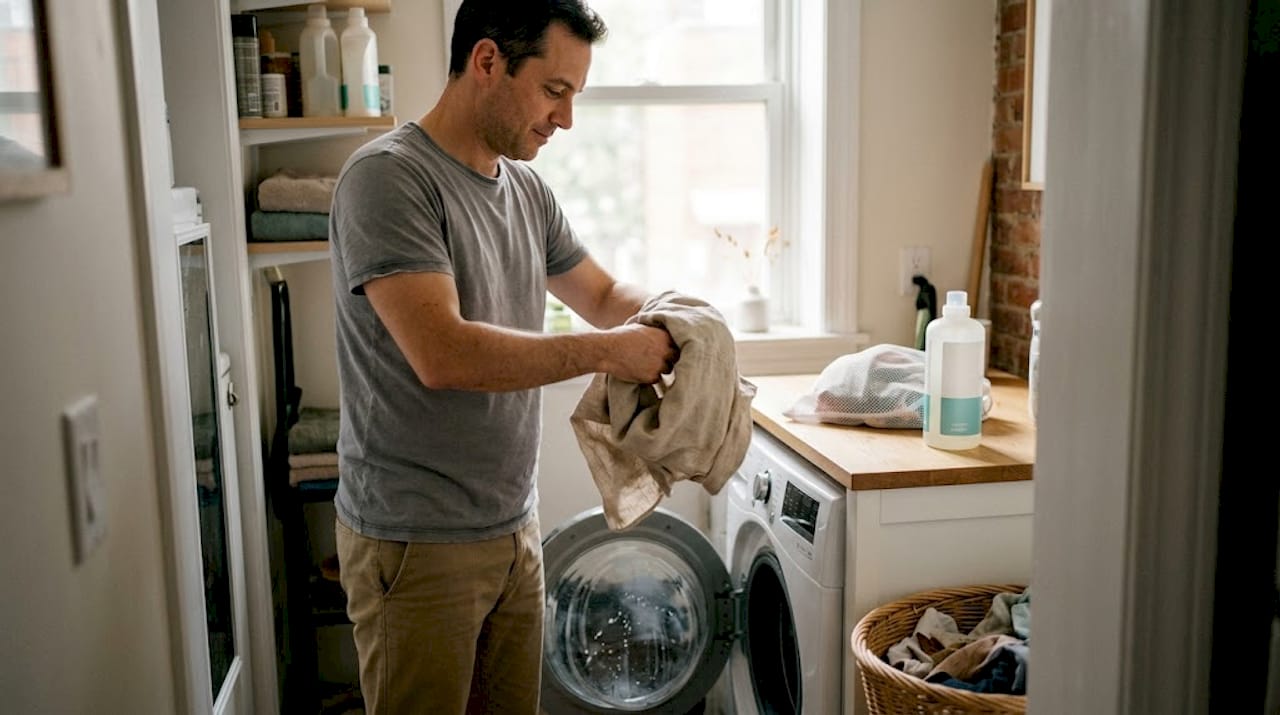
One behavioral shift many people overlook is the power of a full laundry load. Running a half-empty machine wastes water and energy without doing more for fabric care. Waiting until you have a full load to wash saves resources and is genuinely kinder to your clothes.
Drying and storing organic clothing: Sustainable strategies for longevity
The way you dry and store your organic garments has an equally significant impact on how long they last, yet most people give these steps far less thought than washing.
When it comes to drying, here is what actually works:
- Air dry as the default. Hang most items on a drying rack or outdoor line to let gravity and moving air do the work. Air drying is completely free, uses zero energy, and is the gentlest possible treatment for any natural fiber.
- Lay knits and structured pieces flat. Hanging a wet knitted sweater stretches it out of shape permanently. Lay it flat on a clean towel, reshape it gently by hand, and let it dry horizontally.
- Avoid direct sunlight for extended periods. A short stint in morning sun is fine and even helps with natural sanitizing, but prolonged UV exposure bleaches organic dyes and weakens fibers measurably over a single season.
- Use tumble drying with caution. Most organic garments can tolerate an occasional low-heat tumble dry, but check the care label first. Some GOTS-certified items include finishing treatments that make low-heat drying acceptable for specific applications, such as restoring loft to organic cotton towels.
- Never over-dry. Removing a garment while it is still slightly damp and letting it finish air drying reduces static buildup and prevents the brittleness that comes from excessive heat exposure.
For storage, the rules are equally straightforward but easy to neglect:
- Store in cool, dry places using breathable cotton bags or folded neatly in drawers. Breathable storage prevents moisture buildup that causes mildew and odor in natural fibers.
- Avoid plastic garment bags for long-term storage. Plastic traps humidity and can cause yellowing, particularly in white and undyed organic cotton.
- Keep seasonal items away from direct sunlight and strong heat sources like radiators.
- Use cedar blocks or dried lavender sachets as natural moth repellents. Both are effective, biodegradable, and leave behind a pleasant scent rather than the toxic residue of synthetic mothballs.
Pro Tip: Invest in a few mesh laundry bags and use them not just for washing but also for organizing stored items by category. This keeps delicate organic pieces from rubbing against rougher fabrics during both washing and storage.
The broader environmental benefits of responsible storage are well documented in the organic apparel benefits research we have compiled. When garments stay in active use longer, the demand for new production drops, and that is where the most significant environmental savings actually accumulate.
Comparison: Sustainable care vs. conventional methods
It is one thing to describe better care practices. It is another to see exactly how much difference they make compared to the way most people currently look after their clothes. The table below puts the two approaches side by side across the dimensions that matter most to eco-conscious consumers.
| Care aspect | Sustainable methods | Conventional methods |
|---|---|---|
| Washing temperature | Cold (20°C or below) | Hot or warm (40°C to 60°C) |
| Wash frequency | Only when soiled | After every 1 to 2 wears routinely |
| Detergent type | Plant-based, fragrance-free | Enzyme-heavy, synthetic fragrances |
| Stain treatment | Baking soda, white vinegar | Chlorine bleach, synthetic spot removers |
| Drying method | Air dry or flat dry | Tumble dry, often high heat |
| Storage | Breathable cotton bags, cedar | Plastic bags, enclosed boxes |
| Fabric lifespan | Extended by years with gentle care | Shortened by heat, friction, chemicals |
| Carbon footprint | Significantly reduced | High, especially from heated drying |
| Chemical exposure | Minimal, skin and planet safe | Regular exposure to synthetic residues |
| Repair culture | Mend and maintain proactively | Replace when damaged |
The carbon difference is striking. Washing garments with cold water reduces the carbon footprint of each wash cycle by up to 40% compared to warm or hot washing. Scaled across a household doing laundry two to three times per week, that adds up to hundreds of kilograms of CO2 avoided over a single year, without buying a single new product.
The fabric lifespan difference is equally significant. High heat, aggressive spin cycles, and enzyme-heavy detergents degrade natural fiber structures at a molecular level. You can feel this as the gradual loss of softness, shape, and color that makes a beloved garment feel “old” well before its time. Sustainable care methods interrupt this degradation cycle at every step.
For a closer look at which materials benefit most from these approaches, the guide on top organic clothing materials breaks down the specific care needs of organic cotton, linen, hemp, and recycled fibers in practical detail.
The comparison also highlights something less obvious: conventional care methods create ongoing chemical exposure for you and your household, not just the environment. Synthetic fragrances and bleach residues persist on fabric surfaces and can be absorbed through skin contact over time. Switching to plant-based care products is therefore both an ecological and a personal health choice.
Why gentle, mindful clothing care truly matters for the planet
We hear a lot about sustainable fashion focusing on what to buy. In our experience, that conversation misses the larger point. The most environmentally meaningful moment in a garment’s life is not the day you purchase it. It is every single day you keep it in active use rather than sending it to landfill.
Most consumers dramatically underestimate how much the care phase contributes to a garment’s total environmental footprint. Studies on lifecycle assessment show that for everyday clothing, washing, drying, and ironing collectively account for a substantial share of lifetime carbon emissions, often exceeding the manufacturing phase for frequently worn items. Changing your care habits is, in practical terms, one of the highest-leverage sustainability actions available to you right now, with no additional spending required.
EU policymakers are beginning to reflect this in regulation. The circular economy action plan now pushes brands and consumers alike toward durability, repairability, and extended use. The shoppers who build a sustainable wardrobe around mindful care habits are not just ahead of the trend. They are helping normalize a fundamentally different relationship with clothing, one where quality replaces quantity and mending replaces disposing.
The behavioral shifts are small. Cold washing, air drying, a cedar block in the drawer, a five-minute repair instead of a replacement purchase. But their compounding effect across years of wardrobe use is genuinely significant. That is the uncomfortable truth the fashion industry rarely tells you: the greenest thing you can do with a garment you already own is to keep it longer.
Eco-conscious style: Your next step toward a greener wardrobe
Every care habit in this article multiplies the value of choosing organic clothing in the first place. Gentle washing, air drying, and thoughtful storage are not chores. They are the practices that make sustainable fashion genuinely sustainable over the long term.

If you are ready to build a wardrobe that reflects these values from the very first purchase, explore our collection at M23, where every piece is made from certified organic and recycled materials with full supply chain transparency. From women’s wear to children’s apparel, each garment is designed to last and to be cared for exactly as you have learned here. Your wardrobe choices and care habits together make the real difference.
Frequently asked questions
How often should I wash organic clothes?
Wash organic garments only when truly soiled rather than after every single wear, since washing only when soiled reduces both fiber wear and environmental impact meaningfully. Airing out garments between wears extends the time between washes without compromising hygiene.
Is air drying better than using a dryer for organic clothing?
Yes, air drying is almost always preferable because it protects fiber structure and uses zero energy, though some items allow low-heat drying for specific fabric types if the care label explicitly permits it. Always check the label before using any heat.
What should I use to store my organic clothes?
Store in cool, dry places using breathable cotton bags or folded neatly in drawers, and use cedar blocks or lavender sachets to deter moths naturally. Avoid plastic bags and direct sunlight, both of which accelerate fiber degradation.
Why do GOTS-certified organic clothes sometimes shrink?
Minor initial shrinkage is expected because GOTS-certified organic textiles are processed without the harsh chemical finishes that lock conventional fabrics into shape permanently. Following the care label instructions carefully minimizes shrinkage after the first or second wash.