

Recycled Nylon Explained: Benefits, Process, and Eco Impact
TL;DR:
- Recycled nylon is made from industrial or post-consumer waste, reducing reliance on virgin petroleum sources.
- Chemical recycling can produce high-quality nylon that matches virgin performance, offering environmental benefits.
- Environmental impact varies by production method; transparency and certifications help verify genuine sustainability claims.
Many shoppers assume that grabbing anything labeled “recycled” automatically means they’re making the greenest choice possible. With recycled nylon, the reality is more nuanced, and that gap between perception and fact matters. Recycled nylon is growing fast in sustainable fashion, showing up in swimwear, activewear, and bags. But how it’s made, where it comes from, and whether it always outperforms conventional nylon are questions worth asking. This guide walks you through exactly what recycled nylon is, how it’s produced, and what its real environmental footprint looks like, so you can make choices that actually align with your values.
Table of Contents
- What is recycled nylon?
- How is recycled nylon made?
- Environmental impact of recycled nylon
- How to shop for recycled nylon products
- The bigger picture: Is recycled nylon always the best choice?
- Explore more sustainable choices
- Frequently asked questions
Key Takeaways
| Point | Details |
|---|---|
| Not all recycled nylons are equal | Mechanical and chemical methods produce different qualities and impacts. |
| Environmental impact matters | Recycled nylon, verified with LCA, can significantly lower emissions and resource use. |
| Check for real certifications | Trustworthy products display relevant third-party certifications and life cycle data. |
| Shop with an informed mindset | Balance sustainability with transparency and ethical sourcing for your purchases. |
What is recycled nylon?
Recycled nylon is nylon fiber produced from waste materials rather than fresh petroleum-based inputs. Conventional nylon, also called virgin nylon, is made from crude oil through an energy-intensive chemical process. Recycled nylon skips that raw extraction phase by starting with materials that already exist, making it a fundamentally different proposition for the planet.
The sources of recycled nylon fall into two main categories. Pre-consumer waste includes industrial offcuts, scraps left over from manufacturing, and factory floor discards that never reached a customer. Post-consumer waste includes items that were used and then discarded, such as fishing nets, old carpets, worn-out sportswear, and fabric trims. Both pre-consumer and post-consumer sources are valid inputs, though post-consumer recovery tends to carry a stronger sustainability story since it directly prevents waste from reaching landfills or oceans.
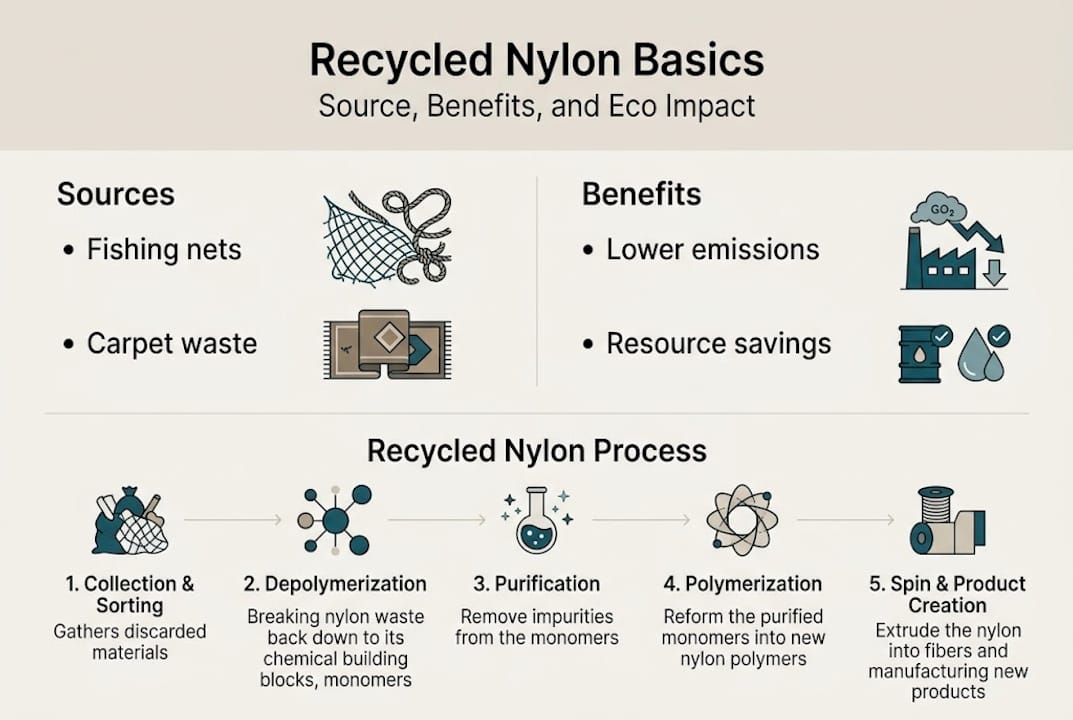
You’ll find recycled nylon in a wide range of products today. Swimwear and activewear are the most common, since nylon’s stretch, moisture resistance, and durability make it ideal for performance fabrics. Bags, hosiery, and even carpets also frequently use recycled nylon. Brands working with recycled materials in fashion often cite recycled nylon as one of their top material choices because of its versatility.
Not all recycled nylon is created equal, though. There are two distinct recycling approaches:
- Mechanical recycling: The material is physically broken down, shredded, and re-spun into fiber. This is simpler and cheaper, but it typically downgrades the fiber’s quality over time. Think of it as turning a high-quality shirt into something closer to a cleaning rag over a few cycles.
- Chemical recycling (regeneration): The waste is broken down at the molecular level and rebuilt from scratch. The result can match virgin nylon in strength, clarity, and performance. Econyl is the most well-known example of this approach.
| Feature | Virgin nylon | Recycled nylon |
|---|---|---|
| Raw inputs | Crude oil | Industrial and post-consumer waste |
| Process | Petroleum refining and polymerization | Mechanical shredding or chemical regeneration |
| Typical quality | Consistent, high performance | Varies by method (chemical = near-virgin quality) |
| Common uses | Apparel, industrial components | Swimwear, bags, activewear, carpets |
| Environmental burden | High (extraction + processing) | Lower, depending on method and energy source |
The distinction between recycled and regenerated matters more than most brands let on. Knowing which type you’re buying is the first step to making a genuinely informed choice.
How is recycled nylon made?
Understanding the production process helps you cut through the marketing and evaluate what a brand is actually doing. The two main pathways, mechanical and chemical recycling, work very differently and produce very different results.
Mechanical recycling follows a relatively straightforward path:
- Waste materials (fabric scraps, old garments) are collected and sorted by fiber type.
- The materials are shredded into small pieces or fibers.
- These fragments are melted and re-extruded into new yarn.
- The yarn is woven or knitted into new fabric.
The downside is that each cycle of mechanical recycling slightly weakens the polymer chains. Over time, the fiber loses performance. This is called downcycling, meaning the material ends up in lower-quality applications with each pass.
Chemical recycling, the process used in the Econyl regeneration system, is more advanced:
- Waste nylon (fishing nets, carpets, fabric offcuts) is collected globally.
- The material is cleaned and depolymerized, breaking it back into its original caprolactam monomer.
- The monomer is purified and re-polymerized into fresh nylon 6 polymer.
- That polymer is spun into fiber of the same quality as virgin nylon.
- ISO-certified life cycle assessments (LCAs) confirm the process’s net environmental advantage.
This regeneration process can, in theory, loop indefinitely without quality loss. That’s the key difference between downcycling and upcycling. You’re not compromising on performance for sustainability. You’re getting both.
When it comes to certifications, look for brands that reference ISO-certified LCA data when making environmental claims. An LCA measures a product’s environmental impact from raw material extraction to end of life, giving you a full picture rather than a single cherry-picked stat.
For sportswear specifically, the recycling and care cycle matters too. Learning how to recycle sportswear helps close the loop on recycled nylon’s lifecycle. And when evaluating brands, checking resources on choosing recycled fabric ethically can help you separate genuine commitment from surface-level claims.
Pro Tip: Don’t just trust a “recycled nylon” label at face value. Ask the brand which recycling method was used and whether they can point to an LCA or third-party certification. A brand with nothing to hide will have the documentation ready.
Environmental impact of recycled nylon
Here’s where the numbers get interesting, and sometimes inconvenient. Recycled nylon does offer real environmental benefits compared to virgin nylon, but the size of those benefits depends heavily on the method used and the energy source powering the process.
Chemical regeneration, such as the Econyl process, shows significant gains. ISO-certified LCA data confirms a net-positive environmental impact compared to virgin nylon production, including reductions in global warming potential, water use, and resource depletion. Avoiding petroleum extraction alone removes a major carbon burden from the equation.
“Regenerated nylon produced via chemical recycling can dramatically reduce the global warming impact of the raw material, with verified savings across energy, water, and CO2 metrics when compared to conventional nylon production.” — Based on Econyl ISO-certified LCA findings.
Here’s a side-by-side comparison to make the differences concrete:
| Category | Virgin nylon | Recycled nylon (chemical) |
|---|---|---|
| CO2 emissions | High (petroleum-based) | Significantly lower |
| Water consumption | High | Reduced |
| Resource use | Finite fossil fuels | Waste-derived, no new extraction |
| Durability | High | Equivalent (chemical recycling) |
| End-of-life options | Limited | Potentially recaptured and recycled again |
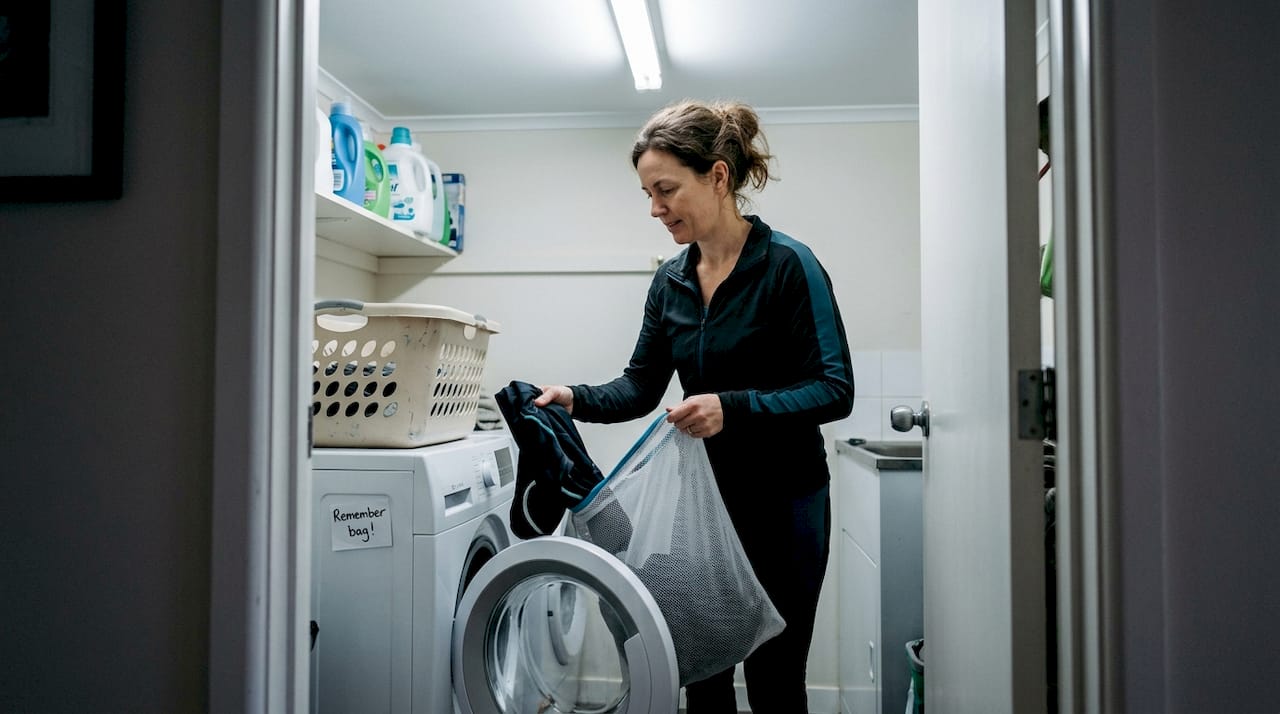
The benefits for eco-conscious shoppers are real, but it’s worth acknowledging the challenges too. Microplastics are one of the most pressing concerns. Like all synthetic fabrics, recycled nylon sheds tiny plastic fibers during washing. These microplastics enter waterways and accumulate in ecosystems. Using a microplastic-catching laundry bag and washing on cold, gentle cycles reduces shedding significantly.
Another limitation is the recycling loop itself. Chemical recycling infrastructure is still scaling up globally, meaning not all recycled nylon products can be recaptured and re-regenerated at end of life. Exploring sustainable fabric types alongside recycled nylon gives you a fuller picture of where the material sits in the broader landscape of eco-friendly textiles.
How to shop for recycled nylon products
Knowing the environmental facts is only useful if you can apply them while you’re actually shopping. Here’s a practical framework to help you sort genuine sustainability from polished marketing.
What to look for:
- Percentage of recycled content: A product labeled “contains recycled nylon” could mean 10% or 100%. Look for high percentages and ask if it’s not listed.
- Certifications: Global Recycled Standard (GRS) and bluesign are two reputable labels for recycled fiber claims. Econyl-branded material comes with its own verified sourcing chain.
- Transparency: Brands that link to LCA data, supplier lists, or third-party audits are far more credible than those using vague sustainability language.
- Recycling method: Chemical regeneration beats mechanical recycling for quality and circular potential. Ask which process was used.
- Country of production: Fair labor practices matter as much as material choice. Brands producing in regions with strong labor protections add another layer of accountability.
Verifying claims with LCA data is one of the most effective tools consumers have against greenwashing. A brand confident in its practices will welcome scrutiny.
Common greenwashing red flags:
- “Eco-friendly” or “sustainable” with no supporting data
- Recycled content percentage hidden or absent from product pages
- No mention of which certifications apply
- Vague claims about “reducing waste” without specifics
Checking out recycled fabric apparel certifications gives you a detailed breakdown of what each label actually guarantees. Staying on top of sustainable apparel trends also helps you understand where the industry is heading and which brands are leading versus lagging.
Pro Tip: Before buying, search the brand name alongside “LCA” or “sustainability report.” Brands doing the hard work publish this information publicly. If it doesn’t exist, that tells you something important.
The bigger picture: Is recycled nylon always the best choice?
Here’s the honest answer: no. And we think that’s actually an empowering truth rather than a discouraging one.
The “recycled = good” shortcut feels satisfying, but it glosses over context. LCA-based analysis consistently shows that impact depends on the energy mix used in production, the recycling method employed, and how the product is used and disposed of after purchase. Mechanically recycled nylon powered by coal-heavy energy grids can sometimes perform worse than virgin nylon produced with renewable energy, depending on the metric you measure.
Then there’s the question of what you’re comparing recycled nylon to. Against virgin nylon, it almost always wins on resource use. Against natural fibers like organic cotton or wool, the comparison gets more complicated, especially on microplastics and end-of-life biodegradability.
What we’ve come to believe is that the most important thing isn’t finding the single “best” material. It’s supporting brands committed to regenerative fashion practices that go beyond swapping one fiber for another. Full supply chain transparency, closed-loop design, and honest reporting matter more than a single material claim on a hangtag.
Ask harder questions. Expect real answers. That’s how you move from conscious consumer to genuine agent of change.
Explore more sustainable choices
At M23, we source recycled nylon and certified organic materials because we believe fashion should be good for the people wearing it and the planet it comes from. Our production in Berlin and Poland follows fair labor standards, and our materials are chosen with transparency, not just trend.

If you’ve been exploring the world of recycled textiles, our in-depth resource on recycled nylon benefits is a great next read. Browse our collections and see how sustainable choices can fit naturally into everyday life, without compromise on quality or style.
Frequently asked questions
What waste is used to make recycled nylon?
Recycled nylon is commonly made from pre-consumer and post-consumer waste, including fishing nets, old carpets, industrial fabric scraps, and worn-out garments. Post-consumer sources are especially valued because they recover materials that would otherwise pollute landfills or oceans.
Is recycled nylon as durable as virgin nylon?
When produced through chemical regeneration, recycled nylon can fully match the strength, stretch, and performance of virgin nylon. Mechanically recycled versions may degrade in quality over time due to the physical processing involved.
Does recycled nylon produce microplastics?
Yes. Like all synthetic fibers, recycled nylon releases microplastics during washing. Using a laundry bag designed to capture microplastic fibers and washing on cool, gentle cycles helps reduce this impact.
How can I be sure a product uses authentic recycled nylon?
Look for recognized certifications like Global Recycled Standard (GRS) or Econyl-branded materials, and ask brands to share LCA data confirming their environmental claims. Brands with genuine commitment will have the documentation available.