

Your guide to responsible fashion labels in Europe
TL;DR:
- Responsible fashion encompasses environmental impact, social conditions, and animal welfare, requiring third-party verification.
- Verify labels by checking certification logos, numbers, and official databases to ensure authenticity.
- European brands like Armed Angels, Veja, and Mini Rodini are leading responsibly, with transparent practices and certifications.
Picking ethical clothing should feel good. Instead, it often feels like decoding a foreign language: vague buzzwords, self-declared eco badges, and a wall of unfamiliar acronyms every time you check a tag. Greenwashing is rampant across the fashion industry, making it genuinely hard to know whether your purchase reflects your values or just clever marketing. This guide cuts through that noise. We’ll show you what responsible fashion truly covers, which certifications carry real weight, how to spot misleading labels, and which brands are leading the way in Europe, including solid options for children’s clothing your family can wear with confidence.
Table of Contents
- Understanding responsible fashion: What it really means
- How to spot genuine responsible fashion labels
- Top responsible European fashion brands (and children’s options)
- Common pitfalls: Greenwashing and misleading claims
- Why responsible fashion labels aren’t enough (and what really matters for families)
- Take your next step toward responsible fashion
- Frequently asked questions
Key Takeaways
| Point | Details |
|---|---|
| Look for real certifications | GOTS, OEKO-TEX, and Fair Wear are reliable signs of responsible fashion brands. |
| Check label authenticity | Always verify certifications on official sites and favor transparent brands. |
| Beware greenwashing tactics | Avoid vague eco-claims and look for proof like supply chain info and clear third-party labels. |
| Focus on durability for families | Choose certified, hard-wearing clothes for long-term value and lower environmental impact. |
Understanding responsible fashion: What it really means
Responsible fashion is not just about swapping synthetic fibers for organic cotton. It spans three interconnected areas: environmental impact (water, chemicals, carbon), social conditions (fair wages, safe factories, no child labor), and animal welfare. A brand can use organic materials while still paying workers unfair wages. Another can treat workers well but rely on supply chains with heavy chemical use. The sustainable fashion basics conversation has matured well beyond the single-issue framing that dominated a decade ago.
This is where third-party certifications become critical. Organizations like GOTS (Global Organic Textile Standard), Fair Wear Foundation, and OEKO-TEX don’t just issue a logo. They require factory audits, traceability documentation, and annual re-verification. The rise of third-party certification reflects the industry’s recognition that self-reported claims simply don’t hold brands accountable. But even certifications vary widely in scope and rigor.
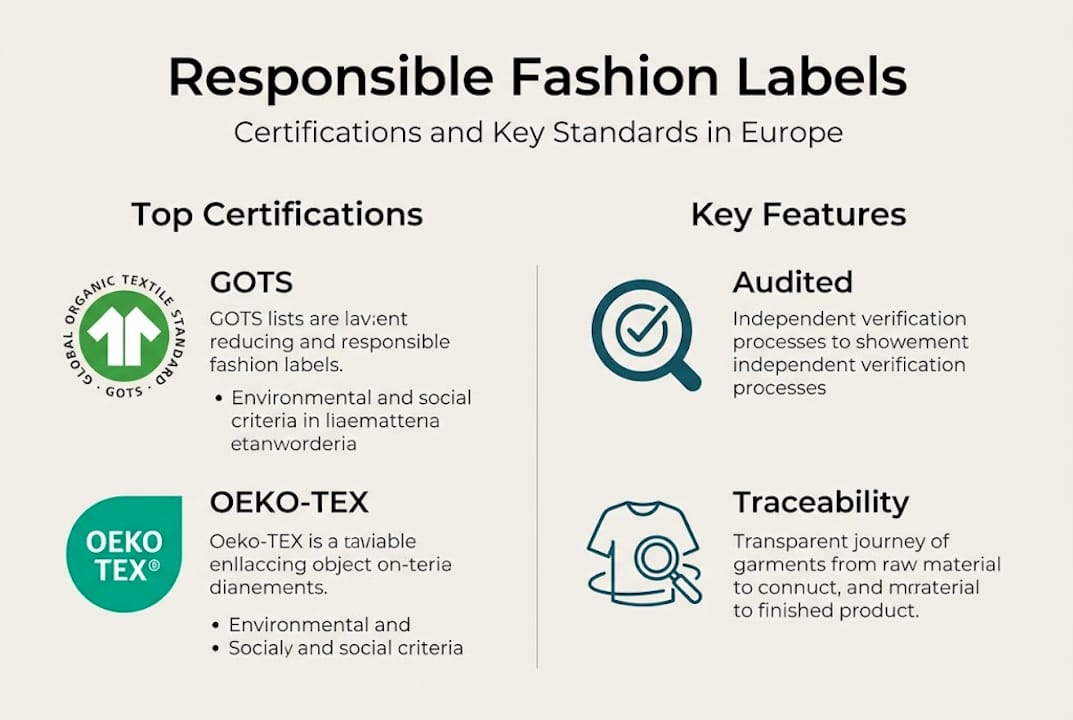
Here’s a quick breakdown of what the most common labels actually cover:
| Certification | Environmental | Social | Animal welfare |
|---|---|---|---|
| GOTS | Yes | Yes | Partial |
| OEKO-TEX Standard 100 | Partial | No | No |
| Fair Wear Foundation | No | Yes | No |
| Fairtrade | Partial | Yes | No |
| GRS (Global Recycled Standard) | Yes | Partial | No |
| B Corp | Yes | Yes | Partial |
Several myths persist that trip up well-meaning shoppers:
- “Organic automatically means ethical.” GOTS-certified organic cotton confirms both environmental and labor standards. But a brand using “organic” without any certification may just be using a buzz word.
- “Recycled materials are always better.” Recycled nylon reduces ocean waste, but the recycling process still consumes energy and water. It’s an improvement, not a solution.
- “A green color scheme signals a green brand.” Visual branding is marketing. Look for logos, numbers, and third-party verification, not color palettes.
“Certifications are tools, not guarantees. Brands need to combine them with transparency, continuous improvement, and genuine stakeholder engagement.” — Conscious Shopper’s Guide for Europe
That’s the baseline. From here, you can make sharper choices when you see a label in the wild.
How to spot genuine responsible fashion labels
Now that you know what responsible fashion truly means, here’s how you can spot authentic labels when you shop. The process doesn’t require expert knowledge. It requires a few minutes and a healthy habit of verification.
Step-by-step label check:
- Find the certification logo. It should appear on the product tag, packaging, or brand website. Blurry or oddly formatted logos are a red flag.
- Locate the certification number. Every legitimate GOTS, OEKO-TEX, or Fair Wear certified product has a traceable license or membership number.
- Verify on the official certifier’s website. GOTS, OEKO-TEX, and Fair Wear all maintain public databases. Type in the brand or number and confirm the status yourself.
- Check the brand’s transparency report. Genuine brands publish supplier lists, audit results, or impact reports annually. No report often means no real accountability.
- Cross-reference with third-party tools. Good On You rates brands across environment, labor, and animal welfare, giving you an independent snapshot in seconds.
Pro Tip: Don’t just check whether a brand is certified. Check which products are certified. Some brands certify only a token line while the rest of their catalog goes unverified. The ethical apparel principles page breaks this distinction down clearly.
Here’s how major certifications compare at a glance:
| Certification | Best for | Audited? | Supply chain traceability |
|---|---|---|---|
| GOTS | Organic textiles | Yes | Full chain |
| GRS | Recycled content | Yes | Input materials |
| Fairtrade | Fair pay, cotton | Yes | Farm level |
| OEKO-TEX 100 | Chemical safety | Yes | Product level |
| Fair Wear | Labor rights | Yes | Cut and sew |
| B Corp | Overall business | Yes | Brand level |
| Bluesign | Chemicals in manufacturing | Yes | Production level |
| WRAP | Factory compliance | Yes | Factory level |
Brands that are certified by responsible European standards tend to cluster in certain countries, which brings us to the brands themselves.
Top responsible European fashion brands (and children’s options)
When you know how to verify labels, you can start recognizing brands that genuinely live up to responsible standards. Europe has a strong cluster of brands doing the hard work.
Adult fashion picks by country:
- Germany: Armed Angels (GOTS, Fair Wear) focuses on organic basics; JAN 'N JUNE uses certified organic materials and publishes supplier lists.
- France: Veja (Fairtrade cotton, B Corp) is widely recognized as one of the most transparent brands globally.
- UK: People Tree (GOTS, Fairtrade) pioneered fair trade fashion and maintains full supply chain transparency.
- Sweden: Nudie Jeans (GOTS, Fair Wear) offers a free repair service and publishes an annual sustainability report.
More than 84 European brands are rated “Good” or “Great” by Good On You, meaning meaningful progress across environment, labor, and animal welfare categories.
Children’s clothing options:
Families face an extra challenge: kids outgrow clothes fast, and cheaper options are tempting. But children’s skin is more sensitive to chemical residues, making certification especially important here.
- Maxomorra (GOTS certified, Sweden): colorful, durable organic cotton basics
- Merle Kids (OEKO-TEX, Germany): minimalist designs, long-lasting fabric
- Mini Rodini (GOTS, Sweden): bold prints with organic and recycled materials
- Zeachild (GOTS, Germany): basics focused on longevity and natural dyes
- Oktopulli (organic cotton, Germany): playful, chemical-free knitwear
Pro Tip: For kids’ clothing specifically, prioritize GOTS or OEKO-TEX Standard 100 certification. These confirm that the fabric has been tested for harmful substances and that no toxic dyes or chemicals are present at any stage of production. Check out our sustainable wardrobe picks for curated family-friendly options, and explore how ethical recycled apparel fits into a responsible family wardrobe.
Common pitfalls: Greenwashing and misleading claims
Still, not every label is trustworthy. Here’s how to avoid the traps and protect yourself from greenwashing. Greenwashing refers to the practice of using vague, unverifiable, or outright misleading environmental claims to make a product appear more sustainable than it is.
Here are the red flags to watch for:
- No third-party certification. If a brand claims to be “eco” or “green” but shows no recognizable certification logo or number, treat it with serious skepticism.
- Vague language only. Words like “conscious,” “natural,” “planet-friendly,” or “responsible” mean nothing without evidence. Specifics matter.
- Only a tiny percentage is certified. Some brands certify one capsule collection and market the entire brand as sustainable. That’s misleading by design.
- No supplier information. Ethical brands know where their clothes are made and are not shy about saying so. Opaque supply chains are a warning sign.
- Claims without lifecycle data. The EU now requires brands to back eco claims with life cycle assessment (LCA) evidence under the ECGT Directive 2024/825.
The EU’s Green Claims Directive bans vague, unverified eco claims in fashion, requiring brands to provide documented proof before marketing products as sustainable.
The numbers behind greenwashing are striking. Up to 60% of sustainability claims reviewed in Europe were found to be false or misleading, and regulators levied €41.9 million in fines across multiple enforcement actions in 2024 and 2025. That’s a signal that consumer protection in this space is growing, but you still can’t rely on regulators alone to catch every false claim before it reaches your cart.
Keep your social responsibility guide bookmarked as a quick reference when a brand’s claims seem too clean to be true.
Why responsible fashion labels aren’t enough (and what really matters for families)
Here’s a perspective worth sitting with: certifications are genuinely useful, but they were never designed to be the whole answer. An audit checks what a factory looked like on the day someone visited. A label tells you what a product contained when it was made. Neither one tells you whether a brand is improving year on year or whether the garment will last three seasons or three washes.
For families especially, the most responsible choice is often the one that doesn’t require a new purchase. Buying fewer, better items beats buying certified-but-cheap every time. No certification is perfect, and the OECD has noted that small brands often can’t afford the certification process even when their practices are genuinely good. That means some truly ethical producers go unrecognized while better-resourced brands carry logos that don’t reflect the full picture.
Our honest take: use certifications as a starting filter, not a final answer. Ask brands directly about their suppliers. Look for repair guarantees and return programs. Prioritize durability over novelty. Understanding why sourcing matters gives you the framework to ask the right questions, not just read the right logos.
Take your next step toward responsible fashion
If you’re ready to put your learning into action, here’s where to start. At M23, we curate a selection of responsibly labeled apparel for adults and children, all produced with transparent sourcing and certified materials. Every product on the platform reflects our commitment to fair labor practices and environmental accountability, so you’re not starting your verification process from scratch.
Browse our sustainable fashion resources for guides, brand spotlights, and transparency reports that make conscious shopping easier for the whole family. Whether you’re updating your own wardrobe or outfitting growing kids, responsible fashion starts with the right information and the right source.
Frequently asked questions
What are the top certifications for responsible fashion in Europe?
GOTS, OEKO-TEX, Fair Wear Foundation, and Fairtrade are the leading certifications used by responsible European brands, each covering different aspects of environmental and social compliance.
How can families pick safe and durable eco-friendly children’s clothing?
Look for GOTS and OEKO-TEX certified kids’ brands because these standards confirm both chemical safety and material sourcing transparency, which directly affects skin safety and how long garments hold up.
How do I check if a brand’s responsible label is genuine?
Visit the official certifier’s database and type in the brand name or certification number, then cross-check with the brand’s published supplier list or transparency report.
What rules prevent greenwashing in fashion in 2026?
The EU’s Green Claims Directive requires brands to document eco claims with verified lifecycle evidence, bans generic marketing terms, and allows fines for misleading environmental advertising.