

Why sustainable apparel costs more and why it's worth it
TL;DR:
- European consumers see higher prices for sustainable fashion due to genuine costs like quality materials, fair labor, and certifications. Sustainable garments are more durable, process environmental costs, and support ethical practices, offering long-term value. Regulations and circular models aim to lower costs and improve access, but true sustainability always involves a premium.
Most European shoppers who care about the planet face the same frustrating moment: they reach for a sustainably made shirt and see a price that stops them cold. It feels like a premium slapped on for marketing reasons. But 41% of European consumers say price is the single biggest barrier to buying sustainable fashion, and that stat deserves a closer look. Because what looks like a markup is actually a window into everything the fashion industry has been hiding for decades. This article breaks down where those extra euros really go, what you get in return, and why the math is more in your favor than you might think.
Table of Contents
- Breaking down the true costs: What makes sustainable apparel more expensive
- The value inside the price: Quality, durability, and true cost
- Barriers and shifting mindsets: Why cost matters to European shoppers
- The evolving landscape: Regulations, circularity, and the future of pricing
- What most articles miss: Sustainability’s real price and why it’s a bargain
- Ready to invest in sustainable apparel?
- Frequently asked questions
Key Takeaways
| Point | Details |
|---|---|
| Material and labor costs | Sustainable fibers and fair wages add substantial costs compared to fast fashion. |
| Long-term value | Higher up-front prices often mean longer-lasting, better garments with less environmental harm. |
| Certification and compliance | Verified eco standards and transparent practices drive up cost but ensure credibility. |
| Changing trends | EU regulation and the rise of circular models could reshape average costs and accessibility. |
| Paying for impact | Choosing sustainable apparel invests not just in your closet, but in people and planet. |
Breaking down the true costs: What makes sustainable apparel more expensive
When you pick up a sustainably made jacket and see a price twice that of a fast-fashion equivalent, it’s natural to question it. But the price difference isn’t padding. It reflects real, structural costs that ethical brands simply cannot cut without compromising their values.
Materials make the biggest difference. Organic cotton and hemp cost significantly more than synthetic alternatives like polyester, which is derived cheaply from petroleum. Organic farming skips synthetic pesticides and fertilizers, which means lower yields, higher land requirements, and more labor per kilogram of fiber. Recycled nylon or certified blends add processing costs on top of that. These eco-friendly fabric choices are better for soil, water, and your skin, but they come at a real financial premium.
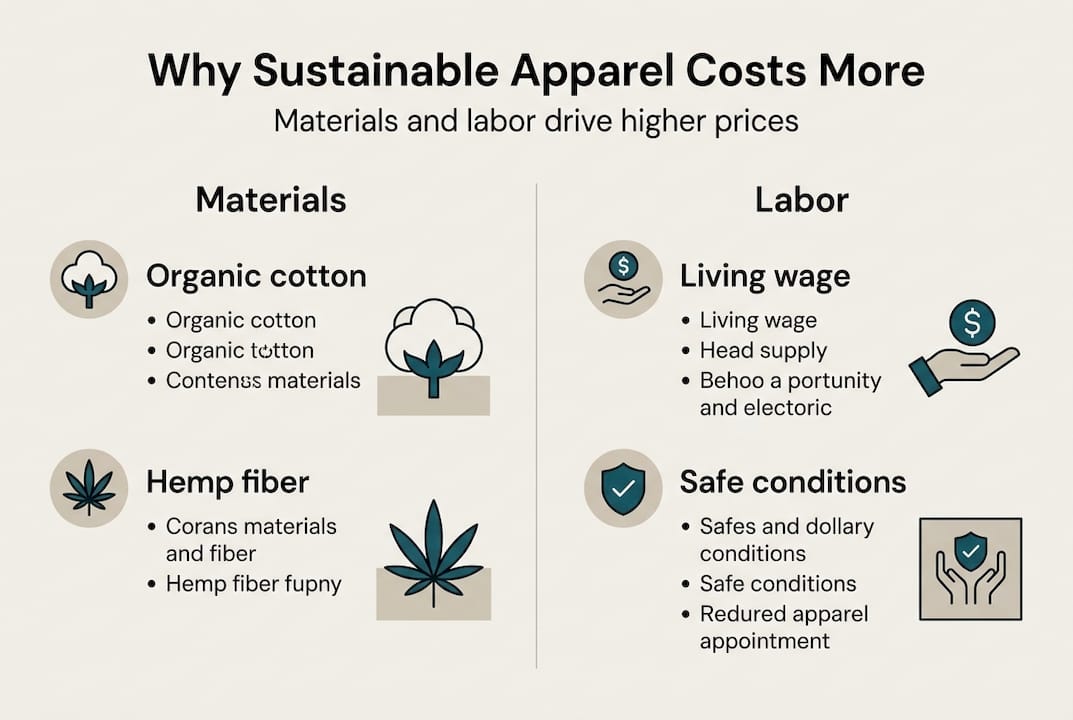
Labor is the second major driver. Ethical brands pay living wages, maintain safe working conditions, and invest in fair practices throughout their supply chains. That raises production costs by 20 to 30% compared to conventional garment manufacturing. Fast fashion keeps prices down by offshoring production to regions with minimal labor protections. Sustainable brands, especially those producing in Europe like in Berlin or Poland, simply don’t take that shortcut.
Scale plays a huge role too. Mass-market brands order millions of units, driving unit costs down dramatically. Sustainable labels typically run small batches to avoid overproduction and waste. That means fixed costs like design, certification, and logistics are spread across fewer garments, pushing the per-item price up.
Certifications and compliance aren’t cheap. Earning and maintaining standards like GOTS (Global Organic Textile Standard) or Fair Trade certification requires audits, documentation, and ongoing fees. These processes verify that every claim on the label is real. Following sustainable apparel cost trends shows these compliance investments are rising, not falling, as standards tighten.
| Cost factor | Fast fashion | Sustainable apparel |
|---|---|---|
| Raw materials | Cheap synthetics | Organic or recycled fibers |
| Labor | Low-wage offshore | Fair wages, safe conditions |
| Production scale | Millions of units | Small, controlled batches |
| Certification | None or minimal | GOTS, Fair Trade, audits |
| Manufacturing location | Low-cost regions | Local or near-shore |
Here is a quick list of what drives up the price in every sustainably made garment:
- Organic or certified raw materials
- Living wages and safe facilities
- Small-batch production runs
- Third-party certifications and audits
- Eco-dyeing and low-pollution finishing processes
- Local or regional manufacturing
Each item on that list has a cost. Together, they explain the gap you see at checkout.
The value inside the price: Quality, durability, and true cost
Knowing why costs are higher sets the stage for what you really get in return. And the return is more tangible than most people realize.
Sustainable garments are built to last. Better stitching, stronger seams, and high-quality finishing mean a jacket from an ethical brand can outlive three or four fast-fashion equivalents. That longevity changes the math completely. If you spend €120 on a sustainably made coat that lasts ten years versus €40 on one that fades and tears in two, you’ve saved money over time, not spent more.

There is also the concept of true cost pricing. Sustainable apparel internalizes the social and environmental costs that fast fashion externalizes. When a €15 t-shirt reaches your hands, somebody somewhere paid for the water pollution, the underpaid labor, and the carbon emissions. Those costs don’t disappear. They’re just passed on to communities, ecosystems, and ultimately to taxpayers. Sustainable pricing puts those costs back where they belong: into the product.
Research confirms that consumers value durability and are willing to pay more when quality signals are clear and credible. The challenge is helping shoppers connect visible quality to the price tag.
Here is a numbered breakdown of what you actually get when you pay more for sustainable apparel:
- Higher-grade materials that feel better and hold their shape longer
- Ethical labor baked into every seam, not offset elsewhere
- Certified supply chains you can trace and trust
- Reduced wardrobe turnover and lower replacement spending over time
- Less waste sent to landfill, which is a genuine environmental benefit
“The real price of a garment includes what it costs the world to make it, not just what it costs the brand.”
For practical guidance on building a wardrobe around these principles, exploring eco-conscious wardrobe choices gives you a useful starting framework. And if you want to understand the broader picture, a climate-friendly fashion guide can help you see how individual purchases add up to real environmental impact.
Barriers and shifting mindsets: Why cost matters to European shoppers
Let’s look beyond the numbers to the motivations and decisions of eco-conscious shoppers across Europe. The gap between values and behavior here is striking and worth taking seriously.
41% of Europeans cite price as the biggest barrier to buying sustainably, and 74% say they want to keep clothes longer. That second figure tells you the values are there. The friction is financial, or at least perceived as financial.
Here are the main barriers European shoppers report:
- Price premium perceived as unaffordable
- Trust issues around greenwashing claims
- Limited availability of styles or sizes in sustainable ranges
- Style concerns that ethical clothing is boring or plain
- Lack of information to distinguish genuinely sustainable items
The aspiration-to-action gap is real. Most shoppers want to do the right thing but hesitate at the register. What tips the balance? Credible certification, visible quality, and a clear explanation of what the price includes. Brands that make this transparent consistently see stronger conversion from eco-conscious browsers.
Here is an encouraging data point: 72% of Europeans are willing to pay a premium for sustainable apparel, but only when they clearly perceive the value. That “conditional on value” part is doing a lot of work. It means the market is ready. It just needs better communication.
“Aspiration is widespread. What sustainable fashion needs now is clarity, not more advertising.”
For those ready to make the shift, exploring premium sustainable fashion choices can help you identify pieces that deliver visible value without second-guessing.
Pro Tip: Before paying a higher price for any sustainable item, check for at least one recognized certification such as GOTS, Fair Trade, or OEKO-TEX. Certifications turn marketing claims into verifiable facts, and they are your clearest signal that the premium is real.
The evolving landscape: Regulations, circularity, and the future of pricing
Finally, let’s explore how fast-changing rules and innovation are making a difference to prices and access for shoppers.
The European Union is actively reshaping the fashion industry through extended producer responsibility rules, known as EPR. Under these frameworks, brands are financially accountable for their products at end-of-life. EU EPR rules will add €1.50 to €5 per garment in costs, which sounds counterintuitive at first. But the effect is to make unsustainable production more expensive while incentivizing circular design that keeps materials in use longer.
Circular models like resale platforms, clothing rental, and take-back programs are also reshaping the pricing picture. The EU circular fashion market is projected to reach €26 billion by 2030. As these models scale, the average cost to access well-made sustainable clothing goes down, even if the sticker price on new items stays higher. You can understand more about the regulatory direction in our overview of EU regulations and ethical apparel.
Here are the key trends shaping sustainable apparel prices heading toward 2030:
- EU EPR mandates making conventional brands absorb true end-of-life costs
- Digital product passports increasing supply chain transparency and consumer trust
- Resale and rental markets expanding access to quality at lower price points
- Sustainable fiber innovation gradually bringing down material costs
- Stricter greenwashing laws filtering out false claims and rewarding genuine brands
For a broader understanding of what all this means for your shopping choices, the sustainable fashion explained guide covers the foundational concepts clearly.
Pro Tip: To save on sustainable fashion right now, explore circular options first. Buying pre-owned certified sustainable pieces means you access the same quality materials and ethical production at a fraction of the new price, while still keeping your spending aligned with your values.
What most articles miss: Sustainability’s real price and why it’s a bargain
Here is the uncomfortable truth most cost comparisons skip: when you compare a fast-fashion price to a sustainable one, you’re comparing a partial cost to a full one. Fast fashion’s low price is an illusion built on costs that simply get shifted elsewhere, onto the environment, onto underpaid workers, and onto the communities living near polluted rivers and overflowing landfills.
We believe sustainable apparel is not just the ethical choice. It’s the rational one. A well-made organic cotton shirt that lasts eight years and can be repaired is a better financial decision than three cheap replacements over the same period. The numbers work out. Most shoppers just never run them.
The brands charging more for genuine sustainability aren’t winning a price war. They’re not trying to. They’re offering something fast fashion structurally cannot: real accountability for every step of production. And if you understand why shop sustainable online, you’ll see that access to that accountability has never been easier.
The real bargain isn’t the cheapest item in the cart. It’s the one you never have to replace, never feel guilty about, and never wonder who paid the real price for it.
Ready to invest in sustainable apparel?
If this breakdown has helped clarify why that higher price tag actually represents genuine value, the next step is putting it into practice. At m23.store, you’ll find a carefully curated collection of sustainably made apparel for women, men, and children, produced under fair conditions in Berlin and Poland, using certified organic and recycled materials.

Every piece is built to last, verified by reputable certifications, and designed to reduce your wardrobe’s environmental footprint over time. Browse the sustainable apparel collection to find timeless, functional pieces that align with your values. And if you want to shop with the latest context in mind, our guide on shop smarter with 2026 trends gives you a clear, practical starting point.
Frequently asked questions
What are the main factors that make sustainable apparel more expensive?
Sustainable materials, ethical labor, and compliance with eco-standards like GOTS and Fair Trade all drive up production costs significantly. Small batch manufacturing adds further cost by reducing the economies of scale that fast fashion depends on.
Does paying more for sustainable clothing always mean you get better quality?
Higher prices usually reflect better materials and fair labor, but look for reputable certifications to confirm genuine sustainability claims. A certified item gives you verifiable proof rather than marketing language.
Will sustainable clothing prices decrease as regulations and trends change?
Circular models and EU regulations are gradually reshaping the cost landscape, particularly through resale, rental, and producer accountability rules. True sustainability will always carry a premium over mass-produced fast fashion, but accessibility is improving.
Why do some sustainable brands cost far more than others?
Certification levels and production scale are the biggest factors, with premium certifications and small production runs adding measurably more cost per garment. Brand positioning also plays a role, but certifications are your clearest guide to whether the premium reflects real standards.