

Biodegradable fabrics: guide to eco-friendly clothing choices
Most people assume that if a fabric comes from nature, it will return to nature cleanly. That assumption drives a lot of well-intentioned purchasing decisions, and it’s mostly wrong. A cotton shirt treated with synthetic dyes and a polyester finish can sit in a landfill for decades. Meanwhile, a lesser-known fiber like linen might break down in weeks under the right conditions. The gap between what “natural” implies and what actually happens at end-of-life is where greenwashing thrives. This guide cuts through that noise, explaining what biodegradable fabrics truly are, which ones qualify, what interferes with breakdown, and how you can make smarter, evidence-backed choices for your wardrobe.
Table of Contents
- Defining biodegradable fabrics
- Examples of truly biodegradable fabrics
- Factors affecting biodegradation: treatments and conditions
- Practical tips for choosing and disposing biodegradable clothing
- A fresh perspective on biodegradable fashion
- Explore sustainable clothing options
- Frequently asked questions
Key Takeaways
| Point | Details |
|---|---|
| Biodegradable fabrics clarified | These textiles break down into natural elements and meet strict standards for environmental safety. |
| Not all ‘natural’ is eco-friendly | Treatments, blends, and some fibers slow the breakdown or make it impossible. |
| Disposal and conditions matter | Proper composting and the right environment speed up degradation and reduce pollution. |
| Avoid greenwashing | Always check standards and real-world breakdown data for authentic biodegradable claims. |
| Lifecycle impact is critical | Balancing end-of-life benefits and production impacts leads to sustainable clothing choices. |
Defining biodegradable fabrics
Biodegradability is not a vague marketing promise. In textiles, it has a specific technical meaning. Biodegradable fabrics are textiles derived from natural or bio-based materials that can be broken down by microorganisms into simpler substances like CO2, water, methane, biomass, and minerals. That definition rules out a lot of what gets casually labeled “eco-friendly” on clothing tags.
The breakdown process has two stages. First, abiotic factors like moisture, heat, and UV light fragment the polymer chains in a fabric. Then, microbial breakdown of cellulose or proteins takes over, consuming those fragments and converting them into basic compounds. Both stages must occur for true biodegradation. A fabric that only fragments into microplastics, for example, is not biodegrading. It’s just getting smaller and more dangerous.
Regulatory standards exist to keep these claims honest. The EU requires that a material demonstrate 90% degradation within 6 months to qualify as biodegradable under compostability standards. The US Federal Trade Commission sets a different benchmark, requiring full breakdown within a reasonable time after customary disposal, generally interpreted as within one year. These standards matter because they give you a benchmark to hold brands accountable.
One important distinction to understand is the difference between “biodegradable” and “bio-based.” A bio-based material is simply one derived from biological sources, like corn starch or sugarcane. But bio-based does not automatically mean biodegradable. Some bio-based synthetics are engineered for durability, which means they resist the very microbial activity needed for breakdown. Here’s what genuinely biodegradable fabrics share:
- They come from natural or minimally processed biological sources
- They contain no synthetic coatings or finishes that block microbial access
- They meet recognized degradation benchmarks under composting or soil conditions
- They do not leave behind toxic residues after breakdown
For a broader look at how these materials fit into the larger picture, our green textiles overview covers the full spectrum of eco-friendly fabric categories and what separates genuinely responsible materials from clever labeling.
“Biodegradability is not an inherent property of natural origin. It is a functional outcome shaped by composition, processing, and environment.”
Examples of truly biodegradable fabrics
Knowing the definition is one thing. Knowing which fabrics actually meet it is where the practical value lies. Common examples include cotton, hemp, linen, wool, bamboo, jute, and some cellulosic fibers like lyocell (Tencel) when untreated. The key phrase there is “when untreated.” Processing changes everything.
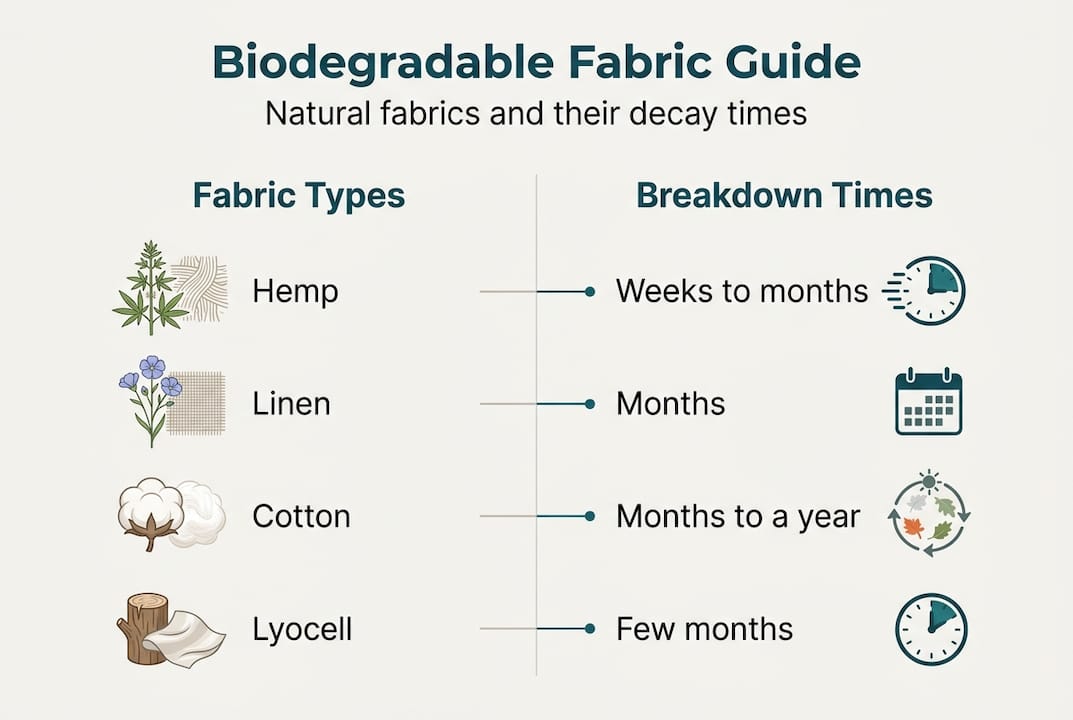
Decomposition timelines vary significantly depending on fiber type and conditions. Empirical benchmarks show hemp and linen degrade in weeks to months, wool in 3 months to years, cotton in months under ideal conditions, and 100% lyocell nonwovens fully biodegrade in just 55 days. Here’s a quick comparison:
| Fabric | Typical breakdown time | Best conditions |
|---|---|---|
| Hemp | Weeks to months | Soil or compost |
| Linen | Weeks to months | Soil or compost |
| Cotton (untreated) | 1 to 5 months | Warm, moist soil |
| Wool | 3 months to 2 years | Soil with microbes |
| Lyocell (Tencel) | Around 55 days | Industrial compost |
| Bamboo (raw) | Several months | Moist conditions |
| Jute | Weeks to months | Humid soil |
Untreated fabrics biodegrade faster because there’s nothing blocking microbial access to the fiber structure. Once you add a water-repellent finish, a synthetic dye, or a wrinkle-resistant coating, you’re essentially putting up a barrier that slows or stops the process entirely.
For building a wardrobe around these materials, our guide on sustainable wardrobe fabrics offers practical advice on selecting pieces that hold up over time while staying genuinely eco-conscious. You’ll also find inspiration in our collection of eco-conscious outfits that use these materials in real, wearable combinations.
Pro Tip: If you want to accelerate breakdown at home, cut old clothing into small pieces before composting. Shredded natural fibers break down significantly faster than whole garments, and the resulting compost is safe and nutrient-rich for your garden.
- Hemp and linen are the fastest-degrading common fabrics
- Wool is slower but fully biodegradable without synthetic blends
- Lyocell is a strong option when certified and untreated
- Bamboo fabric varies widely depending on processing method
Factors affecting biodegradation: treatments and conditions
Even a fabric with excellent biodegradable credentials can become a persistent pollutant once it goes through industrial processing. This is where most eco-conscious shoppers get tripped up, and understandably so. The label says “100% cotton,” but the shirt was dyed with azo dyes, treated with formaldehyde for wrinkle resistance, and finished with a silicone softener. That garment will not biodegrade cleanly.
Treatments, dyes, finishes, and synthetic blends all hinder degradation, and some can introduce toxins into the soil during breakdown. Even small percentages of synthetic fiber in a blend, say 5% elastane in a cotton shirt, can leave behind microplastic residue. “Natural” composition is not enough on its own.
Environmental conditions also play a major role. For biodegradation to proceed efficiently, you need:
- Moisture to activate microbial communities
- Warmth to speed up enzymatic activity (ideally above 50°F or 10°C)
- Oxygen for aerobic decomposition, or specific anaerobic conditions for methane-producing breakdown
- Active microbial populations present in soil, compost, or water
A natural fiber buried in dry, compacted landfill soil may take decades to break down because those conditions are largely absent. This is why landfill is never a good end-of-life plan, even for genuinely biodegradable clothing.
Some bio-based synthetics degrade only in controlled environments like industrial composting facilities, where temperatures exceed 140°F and specific microbial populations are maintained. These materials will not biodegrade in your backyard pile or in a typical landfill. Brands that claim their bio-based polyester is “biodegradable” without specifying the conditions are, at best, being imprecise and, at worst, misleading you.
For keeping your biodegradable garments in good condition longer, reducing the need for early disposal, our sustainable washing tips cover how to clean natural fibers without degrading their structure or introducing chemical residues.
“The conditions required for biodegradation rarely exist in conventional waste streams. A fabric’s end-of-life potential is only realized when the right environment is provided.”
Practical tips for choosing and disposing biodegradable clothing
Armed with the science, you can now approach clothing purchases and disposal with a lot more confidence. The first skill to develop is spotting greenwashing. Bio-based synthetics like some polyesters claim biodegradability but often fail in real-world conditions, degrading only under industrial composting protocols that most consumers never access.
Here’s how to cut through vague claims:
- Ask whether the brand references EU compostability standards or FTC guidelines
- Look for third-party certifications like GOTS (Global Organic Textile Standard) or OEKO-TEX
- Avoid products labeled “eco” or “green” without specific material and processing disclosures
- Prioritize single-fiber garments over blends, since blends complicate both recycling and composting
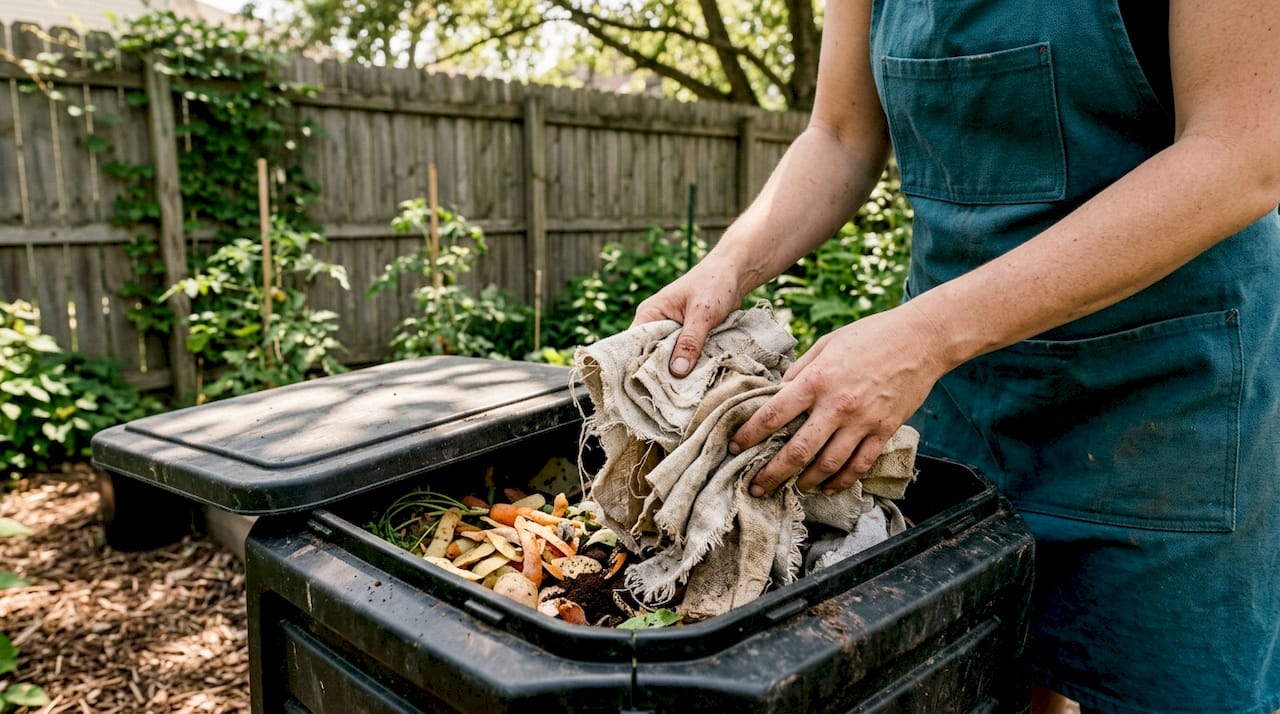
For disposal, the best approach depends on the fabric. Composting and vermicomposting accelerate breakdown, producing nutrient-rich compost without toxicity, provided the garment is untreated and free of synthetic components. Cut garments into strips or small pieces, remove any buttons, zippers, or labels, and add them to a hot compost pile with other organic material.
Here’s a practical disposal checklist:
- Check the fiber content label. If it’s a blend, composting is not ideal.
- Remove all hardware: buttons, zippers, rivets, and elastic bands.
- Cut fabric into strips no wider than 2 inches for faster breakdown.
- Add to a hot compost pile with a good carbon-to-nitrogen ratio.
- Keep the pile moist and aerated, turning it every 1 to 2 weeks.
Balancing end-of-life benefits with production impacts is also worth considering. Our ethical fashion guide walks through how to evaluate the full picture, and our sustainable fashion benefits resource explains why longevity and material choice work together for a lower overall footprint.
Pro Tip: Before buying, search the brand’s website for their material sourcing and processing disclosures. Transparent brands publish this information. Brands that don’t are often hiding something worth knowing.
A fresh perspective on biodegradable fashion
Here’s what most biodegradable fabric guides skip: end-of-life is only one chapter in a much longer story. Natural fibers are superior for end-of-life but may carry higher production impacts, while synthetics are durable but persistent pollutants, and hemp and linen offer the most balanced lifecycle profile of common fibers.
That balance matters more than any single metric. A linen shirt that lasts 15 years and then composts cleanly is a better environmental choice than a “biodegradable” polyester jacket that degrades only in an industrial facility you’ll never use. Durability and end-of-life potential are not competing values. They’re complementary ones.
We’d also push back on the idea that biodegradability alone is a sufficient purchasing criterion. It’s one important factor among several, including water use, chemical inputs, labor conditions, and transport emissions. For building a sustainable wardrobe, the goal is to reduce total impact across the whole lifecycle, not just optimize for one stage.
Pro Tip: When a brand claims their product is biodegradable, ask specifically: under what conditions, in what timeframe, and according to which standard? Vague answers are a red flag.
Explore sustainable clothing options
If this guide has shifted how you think about fabric choices, the next step is finding clothing that actually lives up to these standards. That’s harder than it sounds, but it doesn’t have to be overwhelming.

At M23, we curate clothing made from verified sustainable and biodegradable materials, with transparent sourcing from ethical production in Berlin and Poland. Every piece is designed to last, reducing the pressure to replace and dispose frequently. You’ll find women’s wear, men’s styles, and children’s apparel built from certified organic cotton and other responsibly sourced fibers. Browse the collection and use the educational resources available on the site to make confident, informed choices for a genuinely greener wardrobe.
Frequently asked questions
How do I know if a fabric is truly biodegradable?
Check for compliance with EU or FTC standards and favor untreated natural fibers like cotton, hemp, and linen, avoiding blends or coated materials. The EU requires 90% degradation in 6 months; the FTC requires full breakdown within one year.
Are all natural fibers biodegradable?
No. Treatments, blends, and processing can prevent or severely slow degradation in otherwise natural fibers. Some cellulosic fibers like cellulose acetate and heavily processed viscose degrade slowly or not at all in typical conditions.
Can I compost biodegradable clothing at home?
Yes, for untreated cotton, hemp, linen, and lyocell. Cut and shred the fabric first for faster results. Composting enables full degradation in as little as 2 months for cotton, linen, and viscose under active composting conditions.
What is ‘greenwashing’ in biodegradable textiles?
Greenwashing is when brands make misleading biodegradability claims. Some bio-based synthetics claim biodegradability but only degrade under industrial composting conditions that most consumers never access, making the claim practically useless.
Does choosing biodegradable fabrics guarantee a lower environmental impact?
Not automatically. Natural fibers carry higher production impacts in some cases, such as water use in cotton farming, even though they perform better at end-of-life. The full lifecycle, not just disposal, determines overall environmental impact.