

Climate-Friendly Clothing: Your Guide to Sustainable Choices
TL;DR:
- True climate-friendly clothing considers the entire lifecycle, including production and usage habits.
- Washing and caring for garments have a larger environmental impact than material choice alone.
- Certification and transparency are key for identifying genuinely sustainable fashion options.
Fashion is responsible for 10% of global CO2 emissions, yet most of us still believe that swapping to an organic cotton tee is enough to make our wardrobes planet-friendly. The reality is more layered. True climate-friendly clothing considers every stage of a garment’s life, from raw material to washing machine to landfill. For families in Europe who want to make genuinely ethical choices, understanding what the term actually means, and what it doesn’t, is the first step toward a wardrobe that reflects your values without falling for greenwashing.
Table of Contents
- What makes clothing climate-friendly?
- Common myths and pitfalls in ‘sustainable’ clothing
- Key features to look for in climate-friendly apparel
- How EU regulation (PEFCR) guides climate-friendly clothing
- How to build a truly climate-friendly wardrobe
- Why chasing ‘eco’ labels isn’t enough: A deeper look from the inside
- Discover climate-friendly styles and resources
- Frequently asked questions
Key Takeaways
| Point | Details |
|---|---|
| Beyond the fabric | True climate-friendly clothing accounts for full lifecycle impacts, not just sustainable materials. |
| Check for trusted certifications | The EU Ecolabel and similar marks indicate apparel meets high climate and ethical standards. |
| How you use matters most | Washing, wearing, and extending garment lifespan do more for the climate than just buying ‘green’ labels. |
| Regulations are strengthening | New EU rules will make climate claims more transparent and reliable for European shoppers. |
What makes clothing climate-friendly?
The phrase “climate-friendly clothing” gets used loosely, but in the European context it has a real, measurable definition. It refers to garments designed and produced to minimize environmental harm across their entire lifecycle. That means carbon emissions, yes, but also water use, land use, chemical pollution, and waste.
The EU’s Product Environmental Footprint Category Rules (PEFCR) set the official standard. PEFCR defines 16 separate environmental impact categories for apparel and footwear, making it one of the most thorough assessment frameworks in the world. These categories include:
- Climate change (greenhouse gas emissions)
- Water scarcity (freshwater consumption)
- Land use (soil quality and biodiversity)
- Resource use (fossil fuels and minerals)
- Toxicity (chemical impacts on humans and ecosystems)
- Circularity (recyclability and end-of-life management)
- Labor standards (fair wages and safe working conditions)
For a brand to genuinely call its products climate-friendly, it needs to score well across most of these categories, not just one or two. That’s a high bar, and most global fast fashion brands don’t come close.
| Factor | What it measures | Why it matters |
|---|---|---|
| Carbon footprint | CO2 and equivalent gases | Directly drives climate change |
| Water use | Liters consumed per garment | Cotton farming is extremely water-intensive |
| Land use | Soil degradation and biodiversity | Affects food systems and ecosystems |
| Chemical use | Toxic dyes and finishing agents | Harms workers and waterways |
| End-of-life | Recyclability and waste | Most clothes end up in landfill |
Our ethical fashion guide breaks down how these factors connect to real purchasing decisions. The EU Ecolabel, one of the most trusted marks in Europe, is only awarded to the top performers in the industry. Most brands you see in mainstream retail fall well outside that range. If you want a deeper look at how these principles connect, our complete sustainable fashion guide covers the full picture.
Common myths and pitfalls in ‘sustainable’ clothing
Here’s something most eco-conscious shoppers don’t expect: choosing organic cotton over conventional cotton is a good move, but it may not be your most impactful one. The usage phase of clothing, meaning how often you wash it, whether you tumble-dry it, and how quickly you discard it, accounts for 60 to 80% of a garment’s total emissions over its life. Production matters. But what you do after you buy matters more.
This is one of the most counterintuitive facts in sustainable fashion. A perfectly certified organic linen shirt washed in hot water and tumble-dried three times a week will have a larger carbon footprint than a conventional cotton shirt washed cold and air-dried.
“The most sustainable garment is the one you already own and take care of.”
There’s also a subtler trap called the rebound effect. When shoppers feel good about buying an “eco” product, they sometimes buy more of them. An eco-label can actually increase total consumption, canceling out the environmental gains. Less than 1% of garments are recycled into new clothing, so buying more, even sustainably, still generates waste.
| Myth | Reality |
|---|---|
| Organic materials = climate-friendly | Usage habits often outweigh material choice |
| Eco labels mean you can buy freely | More shopping cancels out sustainability gains |
| Recycling solves fashion waste | Less than 1% of clothes are actually recycled into new garments |
| Natural fibers are always better | Some synthetics from recycled sources have lower overall impact |
Pro Tip: The single highest-impact change you can make is buying fewer garments and caring for the ones you own. Our step by step ethical guide walks you through practical ways to do exactly that.
Key features to look for in climate-friendly apparel
Now that you know what to avoid, here’s what to actively look for. Not all certifications are equal, and not all brands that use sustainable language have the receipts to back it up.
-
Trusted certifications. The EU Ecolabel is awarded only to the top 10 to 20% of performers in sustainability. GOTS (Global Organic Textile Standard) certifies organic fiber content and responsible processing. Fairtrade certification covers fair wages and safe working conditions. These three are your most reliable anchors.
-
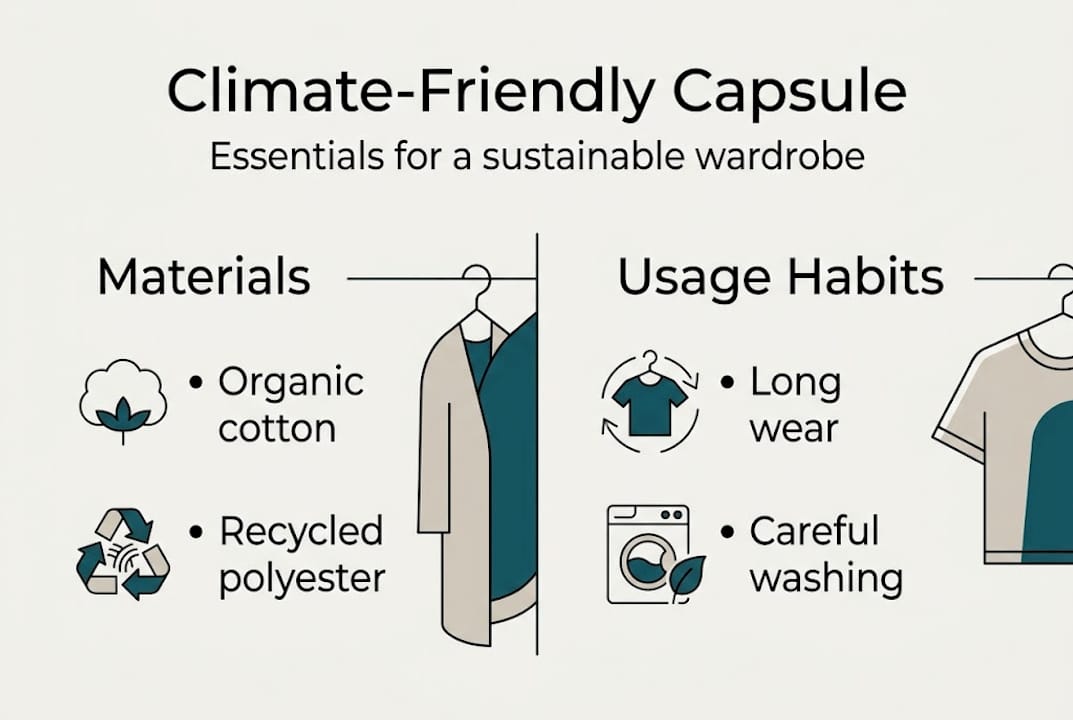
Recycled or recyclable materials. Look for recycled nylon, recycled polyester, or certified organic cotton. Even better, check whether the brand has a take-back or recycling program for worn garments.
-
Full lifecycle transparency. A credible brand will tell you where its materials come from, where garments are made, and what happens at end of life. Vague claims like “eco-conscious” or “green” without specifics are red flags.
-
Fair labor commitments. Climate-friendly fashion is inseparable from ethical labor. Brands producing in Europe, particularly in countries with strong labor protections, generally offer more accountability.
-
Timeless, durable design. A garment built to last five years has a fraction of the climate impact of one replaced every season. Prioritize quality construction and classic cuts over trend-driven styles.
Pro Tip: If you’re building an active wardrobe for the whole family, our eco-friendly sportswear tips cover certified options for movement and outdoor use. For a forward-thinking angle on what comes next, regenerative fashion goes beyond sustainability into actively restoring ecosystems.
How EU regulation (PEFCR) guides climate-friendly clothing
Regulation is catching up with consumer demand, and that’s genuinely good news for shoppers in Europe. The PEFCR framework, which covers climate change, water use, and land use across the EU-27, UK, and EFTA countries, will remain in effect through 2027. It gives brands a standardized method to measure and report environmental impact, making it much harder to hide behind vague eco claims.

What does this mean for you as a shopper? It means labels will become more specific. Instead of a simple “sustainable” tag, you’ll increasingly see multi-factor environmental scores that let you compare products side by side.
| PEFCR impact category | What it tracks | Consumer benefit |
|---|---|---|
| Climate change | Carbon emissions per garment | Compare carbon footprints directly |
| Water scarcity | Freshwater used in production | Identify water-intensive items |
| Land use | Soil and biodiversity impact | Understand agricultural footprint |
| Resource use | Fossil fuel and mineral depletion | Spot reliance on non-renewable inputs |
Key changes coming for European shoppers:
- Greenwashing crackdowns. Vague claims like “eco” or “green” will face stricter scrutiny and potential legal consequences.
- Mandatory lifecycle disclosures. Brands will need to back up environmental claims with verified data.
- Comparable product scores. You’ll be able to look at two similar garments and see which has a lower overall environmental impact.
- Extended producer responsibility. Brands will bear more accountability for what happens to garments after purchase.
Staying informed about where regulation is heading helps you shop smarter today. Our overview of 2026 sustainable apparel trends covers what these shifts mean in practice.
How to build a truly climate-friendly wardrobe
Building a climate-friendly wardrobe for your family doesn’t require a full closet overhaul. Small, consistent changes add up faster than any single “green” purchase. The usage phase of clothing often outweighs production impacts, so your daily habits are your biggest lever.
-
Buy fewer, better pieces. Choose quality over quantity every time. One well-made jacket worn for eight years beats four cheaper ones replaced every two.
-
Wash less and wash cold. Most clothes don’t need washing after every wear. Cold water washing cuts energy use significantly and extends garment life.
-
Air-dry whenever possible. Tumble dryers are hard on fabric and energy-intensive. A drying rack costs nothing and adds years to your clothes.
-
Repair before replacing. A loose button or small tear is fixable in minutes. Repair extends the life of a garment and keeps it out of landfill.
-
Resell, donate, or recycle. When a garment genuinely reaches the end of its life for you, pass it on. Resale platforms, local donation centers, and brand take-back programs all keep clothes in circulation longer.
-
Choose timeless styles. For children especially, classic cuts and neutral colors mean garments can be passed down or resold rather than discarded when trends shift.
Our guide to sustainable wardrobe essentials gives you a practical starting point for building a capsule wardrobe that works for the whole family.
Why chasing ‘eco’ labels isn’t enough: A deeper look from the inside
We believe in certifications. We use them, we pursue them, and we think they matter. But here’s the honest truth we don’t say often enough: eco-labels are a floor, not a ceiling. They tell you a brand cleared a minimum bar. They don’t tell you whether buying that garment was the right choice at all.
The rebound risk is real. When a label makes you feel good about a purchase, it can lower your resistance to buying more. We’ve seen it in our own community. Someone discovers sustainable fashion, gets excited, and suddenly owns twice as many clothes as before, just greener ones. The net impact? Often worse than before.
The most climate-friendly wardrobe is a smaller one, cared for well and used for a long time. That’s not a comfortable message for any clothing brand to deliver, but it’s the one that actually aligns with the science. We’d rather you buy three pieces from us and wear them for years than buy ten and replace them in two seasons. Purchasing discipline and garment care are where most climate savings actually live.
Discover climate-friendly styles and resources
You now have a clearer picture of what climate-friendly clothing actually means, what to look for, and how to make your wardrobe work harder with less. The next step is putting that knowledge into practice.

At m23.store, you’ll find curated collections for women, men, and children made from certified organic and recycled materials, produced with fair labor practices in Berlin and Poland. Every piece is designed to be timeless, durable, and genuinely transparent about its environmental footprint. Browse our climate-friendly collections and take the first step toward a wardrobe that reflects what you actually believe in.
Frequently asked questions
What does climate-friendly clothing mean in Europe?
In Europe, climate-friendly clothing refers to garments assessed under standardized EU criteria that minimize carbon emissions, water, and land use. The PEFCR standard sets the official measurement framework used across EU-27, UK, and EFTA countries.
Is material or how I use clothing more important for the environment?
How you use and care for clothing has a bigger impact. The usage phase accounts for 60 to 80% of a garment’s total emissions, making washing, drying, and disposal habits more impactful than material choice alone.
How can shoppers tell if clothing is truly climate-friendly?
Look for certifications like the EU Ecolabel, which is awarded to only the top 10 to 20% of brands in sustainability. Also check for full supply chain transparency and clear commitments to circularity and fair labor.
Will EU rules change how clothes are labeled?
Yes. New regulation based on PEFCR will require brands to provide detailed lifecycle disclosures rather than vague eco claims, making it easier for shoppers to compare the real environmental impact of garments side by side.