

How to Choose Vegan Sports Apparel That Performs
TL;DR:
- Choosing vegan sports apparel requires careful inspection of all materials, including linings, trims, and hardware, to avoid hidden animal-derived components.
- Certifications like PETA-Approved Vegan and OEKO-TEX Standard 100 provide independent verification of cruelty-free and chemical-safe claims, ensuring product transparency.
Finding the right vegan sports apparel sounds simple until you’re standing in a store holding a pair of leggings with six different fabric names on the label. For fitness enthusiasts committed to ethical choices, learning how to choose vegan sports apparel means going beyond the obvious. It means reading past the marketing, checking every component, and understanding which certifications actually back up the claims. This guide breaks down everything you need: how to spot hidden animal-derived materials, what performance features matter most for athletic use, which sustainability certifications are worth trusting, and how to think about a garment’s full lifecycle before you buy.
Table of Contents
- Key takeaways
- How to choose vegan sports apparel: identifying animal-derived materials
- Performance features that matter in vegan athletic wear
- Certifications that verify vegan and sustainable claims
- Design choices that affect longevity and recyclability
- Your vegan sportswear shopping checklist
- What I’ve learned from years of testing vegan workout gear
- Shop vegan sportswear built to perform and last
- FAQ
Key takeaways
| Point | Details |
|---|---|
| Check every component | Animal-derived materials can hide in linings, adhesives, and hardware, not just the outer fabric. |
| Prioritize technical performance | Breathability, moisture-wicking, and flat seams are non-negotiable for vegan athletic wear that actually works. |
| Trust verified certifications | OEKO-TEX Standard 100 and PETA-Approved Vegan labels shift trust from marketing language to lab-tested results. |
| Simpler blends recycle better | Fewer fabric components and finishes make vegan sportswear easier to recycle at end of life. |
| Longevity beats perfection | A durable garment cared for properly reduces environmental impact more than endlessly switching to “better” fabrics. |
How to choose vegan sports apparel: identifying animal-derived materials
Before you can make a smart choice, you need to know what you’re avoiding. The headline fabric is rarely the whole story. You might grab a polyester tank top that sounds entirely vegan, then miss that the elastic waistband contains wool fiber or the garment uses an animal-based adhesive internally.
The most common animal-derived materials to watch for include:
- Wool and merino wool: Found in base layers and performance tops marketed for temperature regulation
- Silk: Used in linings and high-end athletic wear for its smooth texture
- Leather and suede: Common in shoes, belts, and gym accessories
- Down: Present in insulated jackets and vests
- Cashmere and angora: Appear in lifestyle athletic pieces and cold-weather gear
- Fur: Less common but still found in trim on some outerwear
The trickier offenders are the hidden ones. Linings, adhesives, and fabric treatments may contain animal components even when the outer fabric is synthetic. Some buttons use mother of pearl or animal horn. Interfacing materials can include animal-based stiffeners. Even certain dyes historically used keratin-based carriers.
Pro Tip: When shopping online, search the product’s full materials list under “composition” or “care label” information. If a brand only lists the outer shell fabric without specifying lining or hardware materials, contact customer service and ask directly before purchasing.
Vegan compliance requires transparency on all components, not just the primary fabric. Brands that are genuinely committed to cruelty-free activewear will document every material used. If that information is missing or vague, treat it as a red flag. You can also look for brands that have earned a PETA-Approved Vegan designation, which requires a documented commitment across every part of the product, not just the fabric.
Performance features that matter in vegan athletic wear
Choosing cruelty-free activewear does not mean accepting less from your gear. Vegan activewear should prioritize breathability, moisture-wicking, odor control, and chafe-minimizing construction to be genuinely useful during training. The good news is that modern vegan materials are more than capable of delivering on all of these.
Here is a practical checklist of performance features to evaluate before buying any piece of vegan workout gear:
- Moisture-wicking capability: Look for recycled polyester or Tencel blends, which pull sweat away from skin effectively. Recycled polyester performs comparably to virgin polyester for moisture transport.
- Breathability: Open-weave or mesh constructions in synthetic or cellulosic fabrics allow air circulation during high-intensity workouts.
- Odor resistance: Some recycled polyester fabrics incorporate silver-based treatments or natural antimicrobial properties. Tencel and bamboo-derived lyocell also perform better than conventional polyester for odor control.
- Seam construction: Flat seams and bonded seams reduce chafing on long runs or extended training sessions. This is a construction feature, not a fabric one, so check it regardless of what the garment is made of.
- Durability through repeated washing: A vegan garment made from lower-quality recycled fiber that pills or degrades after 20 washes is not a sustainable choice. Read reviews specifically mentioning wash durability.
- Fit retention: Elastane content (usually 5 to 20%) helps garments hold their shape. Be aware that higher elastane content can complicate recycling later, which creates a tradeoff worth knowing.
Pro Tip: For sport-specific needs, match fabric weight to your activity. Heavy Tencel blends work well for yoga and low-impact training. Lighter recycled polyester mesh is better for running and cycling where airflow and sweat removal are the priority.
Performance needs like sweat handling, fit, chafe reduction, and odor control are non-negotiable for athletes. Do not let ethics become an excuse to accept a garment that fails you mid-workout. The best eco-friendly sports clothing works for your body first.

Certifications that verify vegan and sustainable claims
Certifications are where good intentions meet documented proof. When a brand says its sportswear is “sustainable” or “vegan-friendly,” a third-party certification tells you whether that claim has been independently verified or just printed on a tag.
Here are the key certifications to know:
| Certification | What it verifies | Why it matters |
|---|---|---|
| PETA-Approved Vegan | No animal products in any component | Covers full product, not just outer fabric |
| OEKO-TEX Standard 100 | Chemical safety across over 1,000 substances | Protects skin health during athletic use |
| Textile Exchange | Chain of custody for sustainable fibers | Verifies recycled or organic fiber claims |
| Global Organic Textile Standard (GOTS) | Organic fiber and ethical production | Covers both environmental and labor practices |
OEKO-TEX Standard 100 tests against more than 1,000 harmful substances, which matters more than most people realize. When you’re running five miles in fabric pressed against your skin for an hour, chemical safety is not a minor concern. Independent certifications remove the guesswork entirely.
Third-party audits and chain of custody verification are particularly important for recycled material claims. A brand can say a garment is made from recycled plastic bottles. A Textile Exchange certification proves it. That distinction separates genuine transparency from marketing language.
Choosing certified vegan sportswear brands is not about distrust. It’s about rewarding the brands that put in the work to document their claims so you don’t have to take their word for it.
Material sustainability adds another layer. Recycled polyester, organic cotton, hemp, and cellulosic fibers each carry different environmental trade-offs. Recycled synthetics are vegan but still shed microplastics. Organic cotton is biodegradable but water-intensive. Hemp requires minimal pesticides and builds soil health. Understanding these trade-offs helps you prioritize based on your personal values. Checking out this mindful sports clothing guide can help you dig deeper into how traceability connects to your purchase decisions.
Design choices that affect longevity and recyclability
A garment’s end-of-life story matters as much as its origin. Many athletes buy a new “sustainable” piece each season while their old gear ends up in a landfill. The more informed approach is to select vegan sportswear with both durability and circularity in mind from the start.
Key design factors to evaluate include:
- Fabric blend complexity: Simpler constructions with fewer finishes increase recyclability. A 100% recycled polyester top is far easier to recycle than a polyester/elastane/nylon/cotton blend with DWR coating.
- Elastane content: Even 5% elastane can prevent a garment from entering most textile recycling streams. Look for garments where stretch is achieved through knit structure rather than high elastane content when possible.
- Hardware and trims: Metal zippers, recycled plastic toggles, and natural rubber drawcords are more recyclable than PVC-coated hardware or mixed-material toggles.
- Coatings and finishes: Durable water repellent (DWR) coatings extend a garment’s function but complicate recycling. Some brands now offer PFC-free DWR coatings, which are safer for both the environment and recycling systems.
| Design feature | Effect on recyclability | Better alternative |
|---|---|---|
| High elastane content | Prevents fiber separation in recycling | Low elastane or stretch knit structure |
| DWR coating | Contaminates recycling streams | PFC-free or no DWR coating |
| Mixed-material trims | Hard to separate at recycling facilities | Single-material or detachable trims |
| Bonded seams with adhesive | Adhesive residue harms fiber quality | Flatlock sewn seams |
Garment care also multiplies or erodes sustainability gains. Investing in durability and extending garment lifespan often provides greater environmental benefit than any single material choice. Washing in cold water, air drying, using a microplastics-catching laundry bag, and storing gear properly will add years to any piece of vegan sports apparel. When the time comes to retire a garment, check out this step-by-step sportswear recycling guide before tossing anything out.
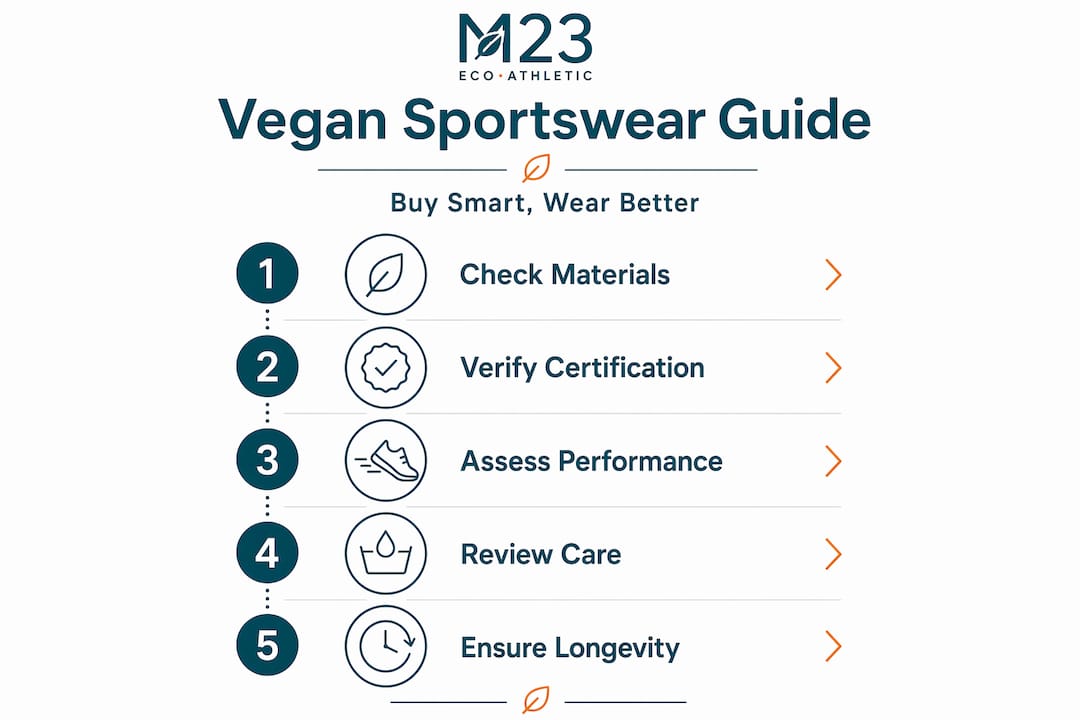
Your vegan sportswear shopping checklist
Use this process every time you shop, whether in-store or online.
- Confirm all components are animal-free. Check the outer fabric, lining, adhesives, trims, and hardware. Look for PETA-Approved Vegan labeling or contact the brand directly.
- Check for performance-relevant technical features. Moisture-wicking, breathability, flat seams, and wash durability should all be present or documented.
- Look for third-party certifications. OEKO-TEX Standard 100 covers chemical safety. Textile Exchange covers fiber claims. GOTS covers organic and labor standards.
- Evaluate the fabric blend for recyclability. Simpler blends with lower elastane content and fewer coatings are easier to recycle.
- Read real customer reviews for long-term durability. A garment that holds up for three years is a better choice than one that pills in three months.
Common pitfalls to avoid: falling for vague phrases like “eco-friendly” or “natural” without certification backing, ignoring lining and hardware materials, or prioritizing fabric origin over construction quality. For a broader look at how to pick vegan clothing options that align with your values, the real impact of your wardrobe is worth reading before your next purchase.
What I’ve learned from years of testing vegan workout gear
I’ve tested a lot of vegan sportswear across a lot of different activities. And the most consistent lesson I’ve taken from that experience is this: the label “vegan” does not automatically mean the garment works for serious training.
Early on, I got excited about a plant-based fiber tank that checked every ethical box. It was PETA-certified, organically produced, beautifully minimal. It also soaked through in the first mile of a run and chafed badly by mile three. The ethics were right. The execution wasn’t.
What I’ve come to believe is that the fitness-first crowd deserves to hear an honest version of this: a vegan garment that fails you mid-workout is not a win for sustainable fashion. It gets replaced faster, generates more waste, and gives people reasons to dismiss ethical apparel as impractical. That’s the opposite of what we want.
My real take on how to select vegan apparel for athletic use is to start with performance requirements and work backward. Define what your body needs during your specific sport. Then find vegan materials and constructions that meet those needs. After that, layer on certifications and circularity considerations. Not the other way around.
I’ve also learned that longevity beats material purity almost every time. A high-quality recycled polyester piece worn 200 times carries far less environmental weight than a theoretically better material that wears out in 40 washes. Care for your gear. It pays off more than most fabric comparisons ever will.
— M23
Shop vegan sportswear built to perform and last
At M23, every piece in the athletic collection is selected with the same criteria this guide lays out: verified materials, documented certifications, and construction that holds up through real training.

You won’t find vague sustainability claims here. M23 works with transparent production in Berlin and Poland, using certified organic and recycled materials that meet OEKO-TEX and other third-party standards. If you want to skip the research and shop with confidence, the M23 sustainable collection is built for athletes who care about both performance and ethics. For additional guidance on making smarter material and certification choices, the eco-friendly sportswear tips blog is a strong next step. Your values and your workouts do not have to compete with each other.
FAQ
What materials are not vegan in sports apparel?
Wool, silk, leather, down, cashmere, and fur are common non-vegan materials. Hidden animal-derived ingredients can also appear in adhesives, linings, and hardware components.
How do I verify that sportswear is truly vegan?
Look for PETA-Approved Vegan certification, which covers all garment components, not just the outer fabric. Contact the brand directly if full material disclosure is not listed.
Does vegan sportswear perform as well as conventional athletic wear?
Yes, when selected carefully. Recycled polyester, Tencel blends, and other vegan fabrics deliver strong moisture-wicking and breathability comparable to conventional materials.
What certifications should I look for in vegan workout gear?
OEKO-TEX Standard 100 verifies chemical safety, Textile Exchange certifies fiber claims, and PETA-Approved Vegan confirms animal-free status across all components.
Can vegan sports apparel be recycled?
Many vegan garments can be recycled, but simpler fabric blends with lower elastane content and fewer coatings are easiest to process. Check brand take-back programs or local textile recyclers when retiring a piece.