

How to recycle sportswear: step-by-step guide 2026
Most activewear ends up in landfills, not because people don’t care, but because blended activewear is hard to recycle due to spandex elasticity and complex fiber combinations. That stretchy nylon-spandex legging or moisture-wicking jersey you love? It’s engineered for performance, not recyclability. This guide walks you through exactly why sportswear recycling is so tricky, how to prepare your items correctly, and the concrete steps you can take to keep your activewear out of the waste stream for good.
Table of Contents
- Understanding the recycling challenges for sportswear
- Preparing your sportswear for recycling: materials, sorting, and requirements
- Step-by-step guide: how to recycle your sportswear
- Troubleshooting and common mistakes in sportswear recycling
- What to expect after recycling: outcomes and environmental benefits
- Explore sustainable sportswear choices and recycling solutions
- Frequently asked questions
Key Takeaways
| Point | Details |
|---|---|
| Blends complicate recycling | Sportswear blends like nylon-spandex are much harder to recycle than pure fabrics due to technical limitations. |
| Preparation is crucial | Sorting and cleaning your sportswear before recycling ensures higher success and reduces contamination and microfibers. |
| Environmental impact reduction | Recycling sportswear lowers global warming potential, cuts microplastic emissions, and reduces demand for virgin materials. |
| Mono-material garments recycle best | Choose and recycle pure polyester or cotton sportswear whenever possible for easier processing and environmental benefits. |
| Verify results and avoid mistakes | Check material labels, avoid recycling blends mechanically, and use local or mail-in programs to maximize sustainability. |
Understanding the recycling challenges for sportswear
Sportswear sits in a frustrating middle ground. It’s made to perform, which means it’s built from blended fibers that resist breakdown, moisture, and wear. That same durability makes it a nightmare for standard recycling systems.
There are two main recycling methods used for textiles today. Mechanical recycling degrades fiber quality and is less effective for blends, since shredding mixed fibers produces a weaker, lower-grade material. Chemical recycling, on the other hand, breaks fibers down to their molecular building blocks, which is far more effective for blends, but chemical recycling requires significant energy and specialized chemicals to work.
Here’s a quick comparison of how these two methods stack up:
| Method | Best for | Limitations |
|---|---|---|
| Mechanical recycling | Mono-material fabrics (pure cotton, pure polyester) | Degrades fiber quality; poor for blends |
| Chemical recycling | Blended fabrics (nylon/spandex, polyester/elastane) | Energy-intensive; limited infrastructure |
Fabrics that recycle best include:
- Pure polyester: Widely accepted in mechanical recycling streams
- 100% cotton: Recyclable but loses fiber length after processing
- Pure nylon: Recyclable with the right program (like Econyl)
- Nylon/spandex blends: Require chemical recycling; rarely accepted at standard drop-offs
Most blended sportswear cannot be processed by existing mechanical recycling infrastructure. Without investment in chemical recycling at scale, the majority of performance activewear still faces downcycling or incineration at end of life.
If you want to go deeper on how fabric choices affect sustainability, our sustainable fashion guide and eco-friendly fabrics guide break it all down clearly.
Preparing your sportswear for recycling: materials, sorting, and requirements
Before you drop anything off or mail anything in, you need to know what you actually have. Flip your garment inside out and find the care label. It tells you the fiber content, and that content determines everything about which recycling stream your item belongs in.
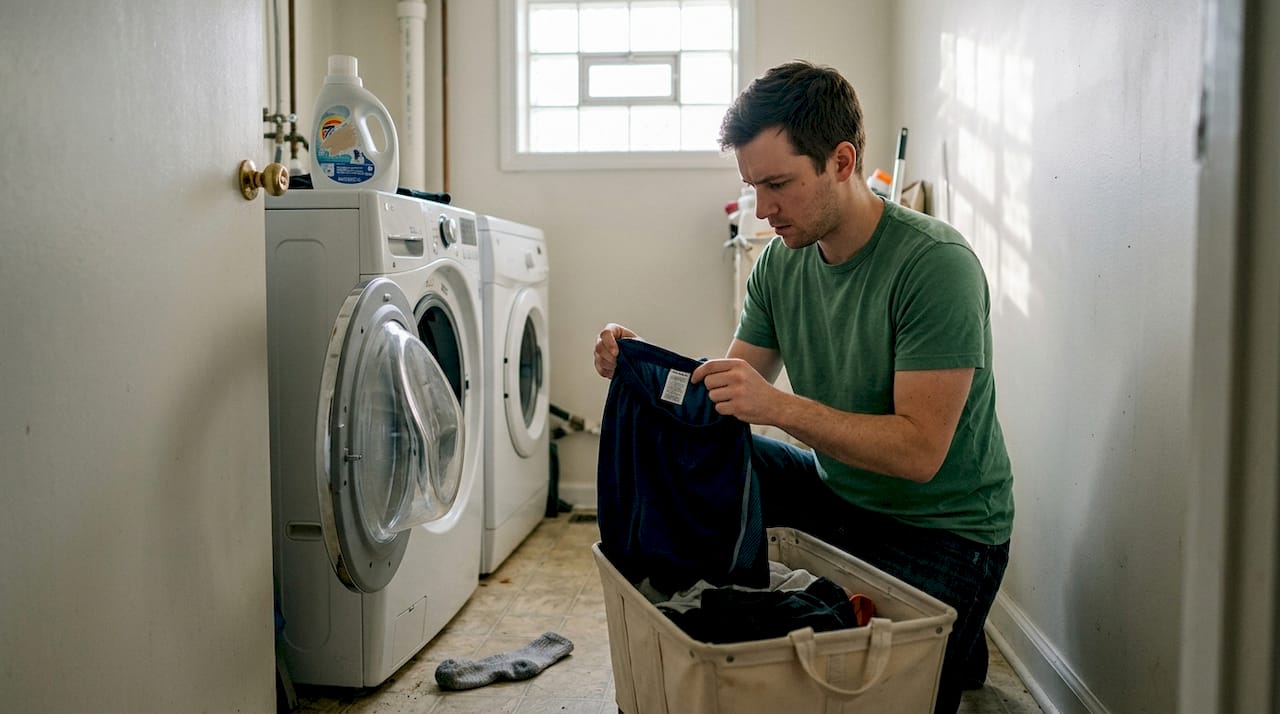
Mono-material sportswear is best suited for recycling, meaning items made from a single fiber type. If your label reads “100% polyester” or “100% cotton,” you’re in good shape. If it reads “88% nylon, 12% spandex,” that item needs chemical recycling and is difficult to process through most current programs.
Here’s a quick reference table for sorting your sportswear:
| Material | Recyclability | Recommended stream |
|---|---|---|
| 100% cotton | High | Mechanical recycling or textile collection |
| 100% polyester | High | Mechanical recycling; many drop-off programs |
| 100% nylon | Moderate | Specialty programs (e.g., Econyl) |
| Nylon/spandex blend | Low | Chemical recycling only; limited availability |
| Polyester/elastane blend | Low | Chemical recycling; check local programs |
Sorting best practices before drop-off:
- Separate mono-materials from blends into different bags
- Remove any detachable hardware like zippers or drawstrings if possible
- Check that items are dry and free of mold or heavy soiling
- Look up your local program’s accepted materials list before going
Pro Tip: Remove care labels and tags before recycling. They’re often made from different materials than the garment itself and can contaminate the recycling stream.
For inspiration on building a wardrobe that’s easier to recycle from the start, browse our sustainable sportswear outfits and learn about sustainable laundry practices that extend garment life before recycling becomes necessary.
Step-by-step guide: how to recycle your sportswear
Once your items are sorted and prepped, follow these steps to actually get them recycled.
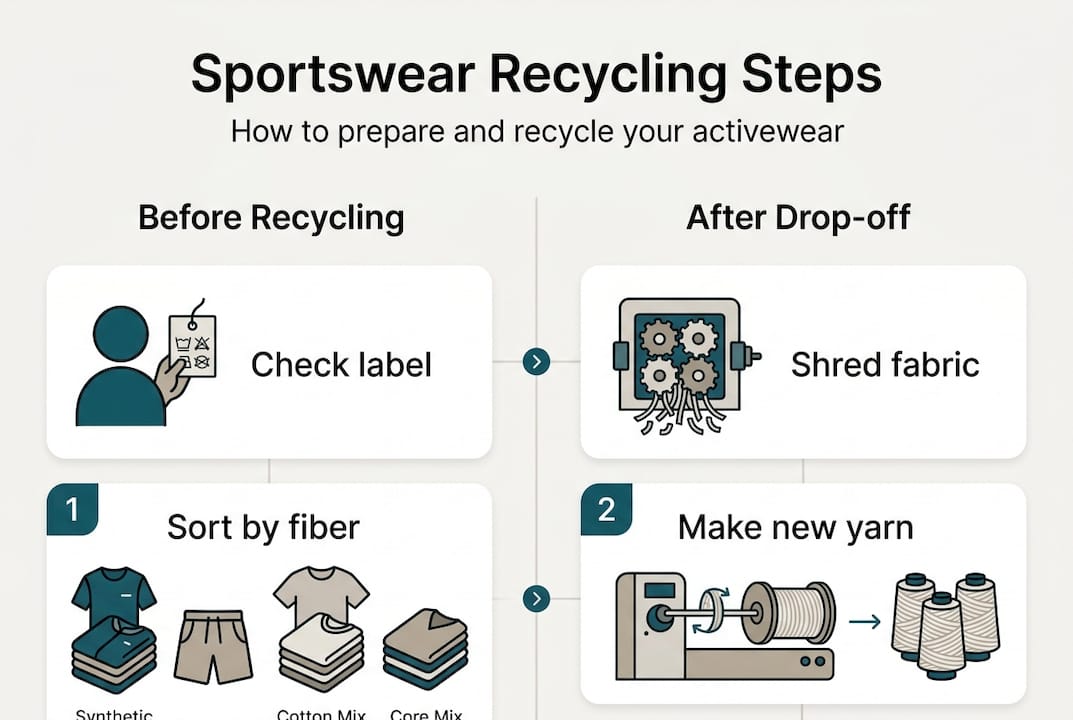
- Clean your sportswear. Wash items before recycling. Dirty garments contaminate recycling batches and can cause entire loads to be rejected. Use a cold, gentle cycle to reduce microfiber shedding.
- Sort by fiber content. Use your care labels. Separate mono-materials (pure polyester, pure cotton) from blends. Keep them in labeled bags.
- Choose the right recycling stream. Mono-materials go to mechanical recycling drop-offs. Blends need chemical recycling programs. Research which programs operate in your area or country.
- Locate a drop-off or mail-in program. Many sportswear brands now run take-back programs. Textile collection bins, municipal recycling centers, and specialty mail-in services are also options. Verify they accept your specific material type.
- Verify and follow up. After drop-off, check if the program provides tracking or confirmation. Some certified programs issue receipts or impact reports so you know your item was actually processed.
The environmental payoff is real. Chemical recycling can reduce global warming potential by 5% and minimizes microplastic release by three orders of magnitude compared to conventional disposal. That’s a massive difference for something as simple as choosing the right drop-off bin.
It’s also worth noting that recycled polyester yarns have variable environmental footprints, with energy use being the key factor. Not all recycled fiber is created equal, so supporting programs that use renewable energy in their processing makes a real difference.
Pro Tip: Wash your sportswear less frequently before recycling. Every wash releases microfibers into waterways. Reducing wash cycles extends garment life and lowers your microplastic footprint before the item even reaches a recycling facility.
For more on extending clothing lifespan and eco-focused wardrobe tips, we’ve got you covered.
Troubleshooting and common mistakes in sportswear recycling
Even well-intentioned recycling efforts go wrong. Here are the most common mistakes and how to fix them.
Common mistakes to avoid:
- Sending blends to mechanical recycling. Spandex elasticity causes machinery issues in mechanical recycling, potentially damaging equipment and contaminating entire batches.
- Recycling dirty or wet items. Contaminated garments get rejected or cause mold in collection bins, ruining other items in the same batch.
- Assuming all textile bins accept sportswear. Many general textile collection points only accept clothing for resale or downcycling, not true fiber recycling. Always check the program’s specifics.
- Ignoring fiber content labels. Guessing at material type is one of the biggest sources of recycling errors. The label is your guide.
- Throwing away items that could be repaired or donated. Recycling is the last resort. Repair, resell, or donate first.
Mono-materials enable easier recyclability; blends may be downcycled or incinerated if no suitable chemical recycling program is available. This is the current reality for most blended activewear in 2026.
If you’re unsure about a specific item, consult the garment label, then contact your local recycling program directly. Many programs have online material checkers or customer support lines. For guidance on keeping your activewear in better shape longer, our eco-conscious laundry tips and sustainable yoga wardrobe guides are worth reading.
What to expect after recycling: outcomes and environmental benefits
So what actually happens once your sportswear is recycled? The answer depends on the material and the program, but here’s the general picture.
Mono-material polyester gets shredded, melted, and re-spun into new polyester yarn. Pure cotton gets broken down into fiber that can be blended into new textiles. Blends that enter chemical recycling are dissolved into their base polymers, which are then re-polymerized into new fiber. Items that can’t be recycled through either stream are often downcycled into insulation, padding, or industrial rags.
Here’s how recycled materials compare to virgin alternatives:
| Material | Virgin production impact | Recycled production impact |
|---|---|---|
| Polyester | High energy, petroleum-based | Lower energy; depends on process |
| Cotton | High water use, pesticide-heavy | Reduced water and chemical use |
| Nylon | High GWP, fossil fuel-derived | Significantly lower GWP with Econyl-type processes |
Production and use phases dominate environmental impact, and recycling reduces demand for virgin materials across all these categories. That’s the core environmental argument for recycling sportswear, even when the process is imperfect.
Positive outcomes from recycling sportswear:
- Reduced demand for petroleum-based virgin fibers
- Lower greenhouse gas emissions compared to producing new materials
- Decreased water consumption in textile production
- Microplastic reduction when chemical recycling replaces mechanical shredding
One important nuance: draw textured yarns have a higher environmental impact than pre-oriented recycled yarns, so the type of recycled fiber produced matters. Supporting programs that produce higher-quality recycled outputs is worth the extra research.
For a broader look at why material choices matter from the start, explore our guides on sustainable fashion and green textile benefits.
Explore sustainable sportswear choices and recycling solutions
Knowing how to recycle your activewear is a powerful first step. But the most sustainable choice starts before you buy. Choosing sportswear made from mono-materials or certified recycled fibers means your gear is easier to recycle when its life is over.

At m23.store, we design activewear and apparel with end-of-life in mind, using certified organic and recycled materials produced fairly in Berlin and Poland. If you’re ready to build a wardrobe that’s easier on the planet from day one, visit our sportswear sustainability page to learn about our materials, production practices, and commitment to circular fashion. Every piece we make is a step toward a system where recycling actually works.
Frequently asked questions
Can all sportswear be recycled, or only certain materials?
Only mono-material sportswear like pure polyester or cotton can be fully recycled through standard streams. Blends with spandex, nylon, or elastane require chemical recycling, which is still limited in availability.
What is the environmental benefit of recycling sportswear?
Recycling sportswear reduces demand for virgin materials and lowers global warming potential. Chemical recycling reduces GWP by about 5% and cuts microplastic emissions by three orders of magnitude compared to conventional disposal.
What should I do if my sportswear contains blends like nylon-spandex?
Check for local or mail-in programs that accept blends for chemical recycling. Be aware that most current infrastructure does not yet support blended activewear recycling at scale.
Does washing sportswear before recycling make a difference?
Yes. Cleaning sportswear prevents contamination in the recycling stream. Less frequent washing also cuts microfiber emissions during the garment’s use phase, which matters before it ever reaches a recycling facility.
Where can I recycle my sportswear?
Look for textile collection points, brand take-back programs, or mail-in recycling services. Options depend on local infrastructure and the specific materials in your garment, so always verify before dropping off.