

Sustainable fabric types: Eco-friendly choices for shoppers
TL;DR:
- Sustainable fabric choices depend on environmental impact, ethics, and durability, with no single perfect option.
- Organic cotton has benefits like biodegradability but requires significant water and land resources.
- TENCEL Lyocell stands out for its eco-friendly, closed-loop production process and low water use.
Picking truly sustainable clothing feels harder than it should. Brands plaster words like “eco-friendly,” “green,” and “conscious” across their labels, but those terms rarely tell you what actually happened to the fabric before it reached your hands. Water use, chemical inputs, carbon emissions, worker conditions, and end-of-life recyclability all shape a fabric’s real footprint. This guide cuts through the noise. We compare the most talked-about sustainable fabric types, from organic cotton to TENCEL Lyocell to recycled fibers, using a clear framework so you can make choices that genuinely match your values and your wardrobe needs.
Table of Contents
- How to evaluate sustainable fabrics
- Organic cotton: Pros, cons, and real impacts
- TENCEL Lyocell and modal: Closed-loop excellence
- Recycled fibers: Polyester, cotton, and circularity challenges
- Why ‘sustainable’ is not one-size-fits-all in fashion
- Ready to shop consciously? Find ethical fabrics at M23
- Frequently asked questions
Key Takeaways
| Point | Details |
|---|---|
| Sustainability is nuanced | Regional factors and lifecycle stages impact fabric sustainability—no universal answer. |
| Organic cotton pros and cons | Organic cotton uses fewer chemicals but has higher land, water, and CO2 impacts. |
| Closed-loop benefits of TENCEL | TENCEL Lyocell stands out for closed-loop manufacturing and lower water usage. |
| Recycled fiber trade-offs | Recycled polyester and cotton offer lower emissions but face challenges like microfibers and durability. |
| Smart ethical shopping | Evaluate certification, functional needs, and regional realities to choose what works for you. |
How to evaluate sustainable fabrics
Sustainability is not a single score. It is a set of trade-offs across a fabric’s entire life, from the field or factory where raw materials begin to the moment you retire a garment. Understanding those trade-offs is the first step toward smarter shopping.
A useful framework rests on three pillars:
- Environmental impact: Water consumption, land use, greenhouse gas emissions, chemical inputs, and biodegradability all count. A fabric can score well on one measure and poorly on another.
- Ethical production: Who made it, under what conditions, and at what wage? Fair labor standards matter as much as ecological metrics. Our sustainable fashion guide walks through both dimensions in detail.
- Functional lifespan: A fabric that lasts ten years with minimal care has a lower per-wear footprint than one that pills and fades after six months, even if its raw materials are pristine.
Regional variation complicates things further. A Life Cycle Assessment shows regional variation in fabric sustainability depending on local energy grids, water scarcity, and regulatory standards. Organic cotton grown in a water-stressed region carries a different footprint than the same fiber grown where rainfall is plentiful.
Certifications are your shortcut through greenwashing. Look for GOTS (Global Organic Textile Standard), OEKO-TEX Standard 100, Bluesign, or Fair Trade labels. These are third-party verified and require audits, not just brand promises. The cotton LCA report from Textile Exchange is a solid reference if you want to dig into the numbers yourself.
No single fabric wins across every category. The right choice depends on whether you are buying activewear, everyday basics, or a coat you plan to keep for a decade. Prioritize based on what matters most to you: water, carbon, durability, or end-of-life recyclability.
Pro Tip: Always check for at least one third-party certification before trusting a brand’s sustainability claims. A label saying “eco-friendly” costs nothing. A GOTS certificate requires an annual audit.
Organic cotton: Pros, cons, and real impacts
Organic cotton is one of the most recognized sustainable options, and for good reason. It is grown without synthetic pesticides or fertilizers, which protects soil health and reduces chemical runoff into waterways. It is also naturally soft, hypoallergenic, and fully biodegradable at end of life, making it a strong choice for people with sensitive skin or those shopping for children’s clothing.
But organic cotton is not without its burdens. Research on organic cotton trousers found they generate 12.23 kg CO2e per garment, with high land use as a consistent concern. The same research found that raw materials account for 43 to 45 percent of total environmental impacts across the garment’s lifecycle. That is a significant share, and it means the farming stage matters enormously.
Here is a quick summary of organic cotton’s profile:
- Pros: No synthetic pesticides, biodegradable, hypoallergenic, softer hand feel than conventional cotton
- Cons: High water demand in many growing regions, significant land use, moderate CO2 footprint per garment
- Best for: Everyday basics, baby clothing, bedding, items you plan to keep long term
“Raw materials can account for up to 45% of a garment’s total environmental impact, making sourcing decisions the single most consequential choice a brand makes.”
This is worth sitting with. It means that even a perfectly made garment, sewn in a solar-powered factory with fair wages, carries a heavy footprint if the fiber itself was grown irresponsibly. You can explore how different organic clothing materials compare across these dimensions, and how to build a sustainable wardrobe that balances these trade-offs over time.
Organic cotton remains one of the better options when you prioritize biodegradability and skin safety. Just go in with realistic expectations about its water and land footprint.
TENCEL Lyocell and modal: Closed-loop excellence
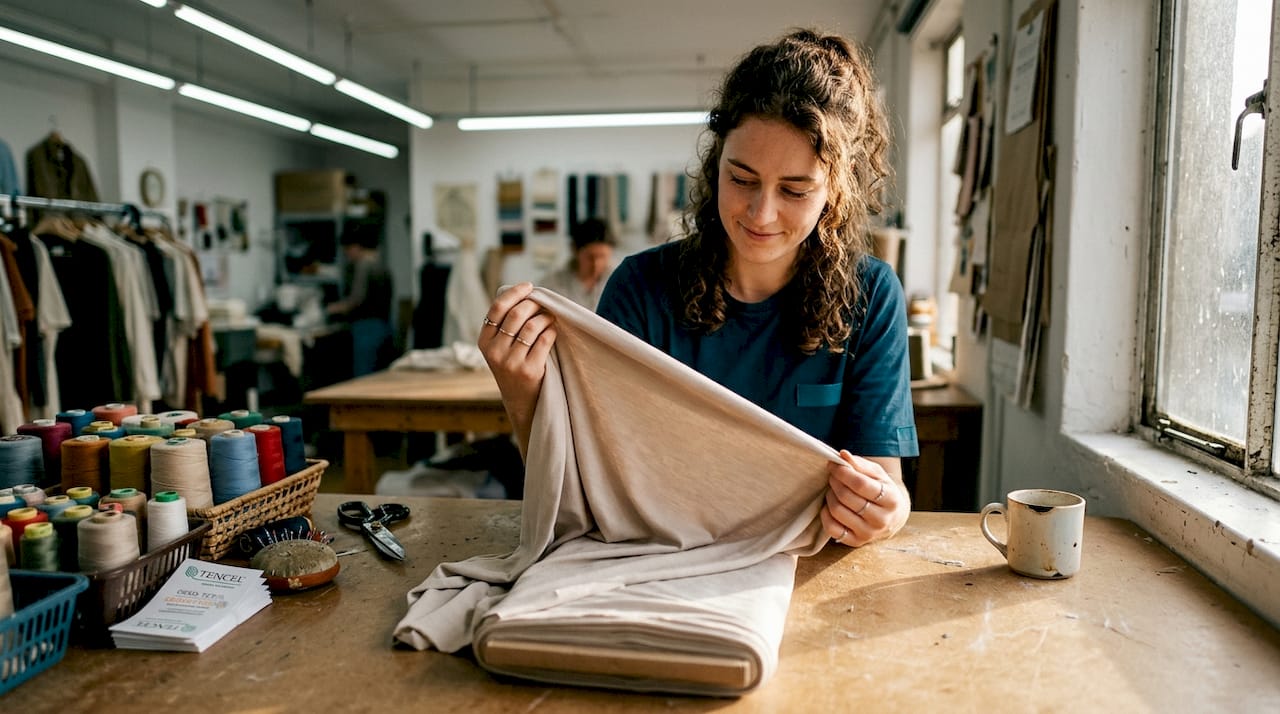
If organic cotton is the familiar choice, TENCEL Lyocell is the quietly impressive one. Made from wood pulp sourced primarily from eucalyptus and beech trees, Lyocell is produced through a closed-loop manufacturing process that recycles over 99% of solvents used during production. That is not a marketing claim. It is a verifiable industrial process, and it dramatically reduces chemical waste compared to conventional viscose or cotton processing.
Here is how TENCEL Lyocell stacks up across key sustainability measures:
| Factor | TENCEL Lyocell | Conventional Cotton |
|---|---|---|
| Solvent recovery | Over 99% | Not applicable |
| Water use | Significantly lower | Very high |
| Biodegradability | Yes | Yes |
| Source material | FSC-certified wood | Agricultural crop |
| Chemical inputs | Minimal | High (conventional) |
Modal, a close relative of Lyocell, is also made from wood pulp and shares many of the same benefits. It tends to be even softer than Lyocell, making it popular for underwear, loungewear, and items worn directly against the skin.
Steps for identifying genuine TENCEL products:
- Look for the official TENCEL branded fiber logo on the garment’s care label.
- Check that the brand lists the wood source or FSC certification.
- Confirm the manufacturing country and whether it aligns with known Lenzing production facilities.
- Cross-reference with the brand’s transparency report if one is available.
Pro Tip: The TENCEL logo is a licensed trademark, not a generic term. Any brand using it has been verified by Lenzing, the Austrian company that developed the closed-loop process. Generic “lyocell” without the TENCEL mark may not meet the same standards.
For a broader look at how these fibers fit into the wider textile landscape, our eco-friendly fabrics guide covers the full spectrum. And if you are building out your wardrobe with these materials, the sustainable outfits guide offers practical styling ideas.
Recycled fibers: Polyester, cotton, and circularity challenges
Recycled fibers represent a different approach to sustainability. Instead of growing new raw materials, they divert existing waste, plastic bottles, old garments, industrial scraps, and process it into new fiber. The concept is appealing, and in many ways the reality backs it up. But there are real limitations worth knowing.
Recycled polyester (rPET) is made primarily from post-consumer plastic bottles. It uses significantly less energy than virgin polyester and generates fewer greenhouse gases during production. However, rPET sheds microfibers during washing, tiny plastic particles that pass through wastewater treatment and enter waterways. This is not a minor footnote. It is one of the most pressing pollution concerns in the textile industry right now.
Recycled cotton reduces demand for virgin fiber and keeps textile waste out of landfills. The trade-off is that recycling shortens the fiber length, which reduces tensile strength. Garments made from 100% recycled cotton often need blending with virgin fiber to maintain durability.
| Factor | Recycled polyester | Recycled cotton |
|---|---|---|
| GHG vs. virgin | Lower | Lower |
| Microfiber shedding | Yes, a concern | Minimal |
| Durability | High | Reduced |
| Biodegradability | No | Yes |
| End-of-life recyclability | Difficult | Possible |
Key concerns with recycled fibers:
- Microfiber pollution from rPET washing is an ongoing environmental issue
- Recycled cotton often requires virgin fiber blending to maintain strength
- Both options still face significant end-of-life recycling challenges
- Certification for recycled content (look for GRS, the Global Recycled Standard) is essential
“Circularity in fashion is still more aspiration than reality. Recycled fibers are a meaningful step forward, but they do not yet close the loop fully.”
For practical guidance on choosing recycled fabric apparel without falling for greenwashing, we have a dedicated resource that goes deeper on certifications and brand accountability.
Why ‘sustainable’ is not one-size-fits-all in fashion
Here is what the conventional wisdom often gets wrong: it treats sustainability like a ranking. People want a list. Fabric A is better than Fabric B. Done. But no single best fabric exists because the answer changes depending on where you live, how you wash your clothes, how long you keep them, and what you prioritize.
A consumer in Scandinavia buying TENCEL Lyocell made with renewable energy has a very different footprint than someone in a region where manufacturing relies on coal. Organic cotton grown in a drought-prone area is a worse water choice than recycled polyester, even though recycled polyester is plastic.
The brands that serve you best are the ones that show their work. Transparency reports, third-party certifications, and supply chain disclosures are signals that a brand is not just picking the most marketable fabric story. They are doing the harder work of actually measuring and improving. Follow the sustainable apparel trends shaping how brands communicate this in 2026.
Our honest take: stop looking for the perfect fabric and start looking for the most honest brand. The fabric is one variable. The whole system matters.
Ready to shop consciously? Find ethical fabrics at M23
Understanding sustainable fabrics is only half the journey. The other half is finding brands that actually deliver on the promise.

At M23, we curate clothing made from certified organic cotton, TENCEL Lyocell, and recycled materials, produced under fair labor conditions in Berlin and Poland. Every piece is designed to last, because the most sustainable garment is the one you wear for years, not seasons. Whether you are shopping for women’s wear, men’s basics, or children’s apparel, you will find options that match your values without compromising on quality or style. Browse the collection and let your next purchase reflect what you actually believe in.
Frequently asked questions
What are the most sustainable fabric types?
TENCEL Lyocell, organic cotton, recycled polyester, and recycled cotton are among the strongest options, though no single best fabric applies universally since the right choice depends on your region and intended use.
How does recycled polyester compare to organic cotton in sustainability?
Recycled polyester produces fewer greenhouse gases but sheds microfibers during washing, while organic cotton avoids synthetic chemicals but requires significant land and water to grow.
Why is TENCEL Lyocell considered eco-friendly?
It uses a closed-loop process that recycles over 99% of solvents during production and requires considerably less water than conventional cotton farming.
Do recycled fabrics lose strength after recycling?
Yes. Recycled cotton loses strength due to shorter fiber length after processing, while recycled polyester retains more structural integrity but introduces microfiber pollution as a trade-off.