

What are green textiles? A guide to eco-friendly fabrics
Choosing truly sustainable clothing feels overwhelming when every brand claims to be green. Many textiles marketed as eco-friendly fail to meet genuine sustainability standards, leaving conscious consumers confused about what actually qualifies as a green textile. This confusion stems from inconsistent definitions, misleading marketing, and complex environmental tradeoffs between different fabric types. Understanding what makes textiles genuinely sustainable requires looking beyond surface claims to examine production methods, lifecycle impacts, and credible certifications. This guide clarifies what green textiles really are, explains their environmental footprint using evidence-based metrics, and provides practical strategies for identifying authentically sustainable fabrics that align with your values.
Table of Contents
- Key takeaways
- Understanding what green textiles are
- Environmental impact and sustainability benchmarks for green textiles
- Navigating the complexities and tradeoffs in green textile choices
- Practical tips for choosing and supporting truly green textiles
- Explore sustainable fashion with M23
- Frequently asked questions
Key Takeaways
| Point | Details |
|---|---|
| Definition of green textiles | Green textiles are fabrics or fibers produced to minimize environmental harm through sustainable materials, efficient processes, and reduced resource use across the product lifecycle. |
| Eco friendly fiber options | Examples include organic cotton, hemp, lyocell, recycled polyester, and silk treated with enzymes. |
| Lifecycle thinking matters | Lifecycle thinking assesses sustainability across raw materials, production, use, and end of life using evidence based metrics. |
| EU regulatory drivers | European policies encourage transparency, circularity, and credible certifications to guide buyers. |
| Authentic fabric tips | Look for credible certifications, read lifecycle claims, and verify production methods beyond marketing. |
Understanding what green textiles are
Green textiles, also known as eco-textiles, are fabrics or fibers produced to replace environmentally harmful textiles, minimizing ecological impact through sustainable materials, processes, and reduced resource use. These alternatives address the significant environmental burden of conventional textile production, which relies heavily on pesticides, synthetic chemicals, and water-intensive processes. The defining characteristic of green textiles is their intentional design to reduce harm across multiple environmental dimensions including resource extraction, manufacturing emissions, and end-of-life disposal.
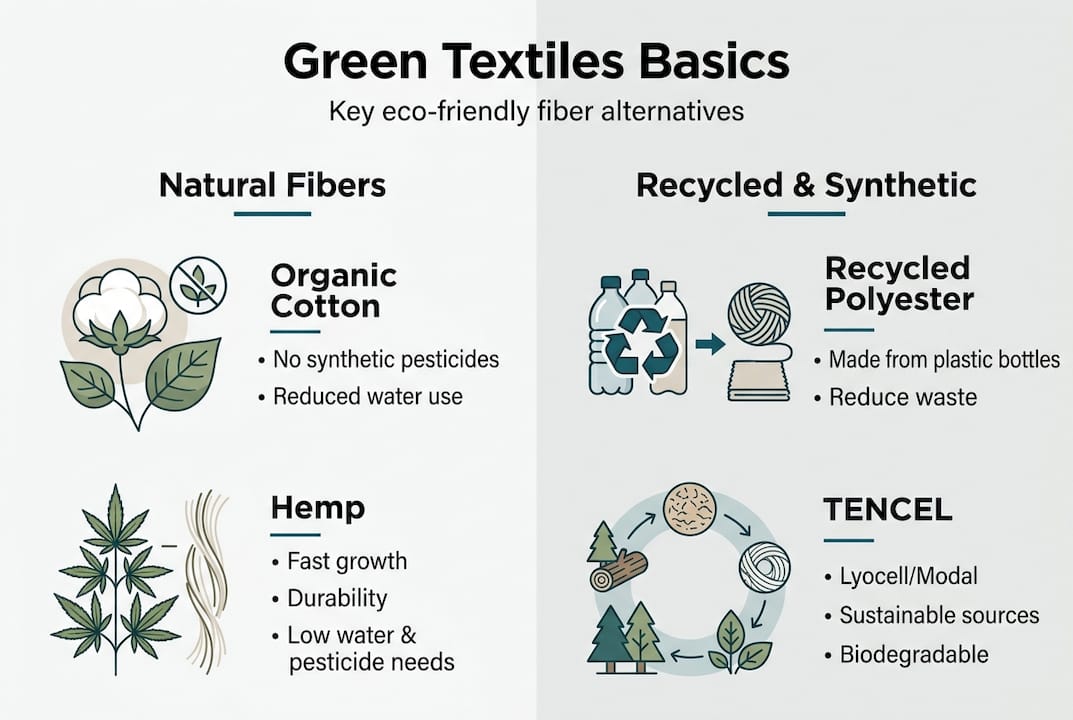
Several material categories qualify as green textiles, each offering distinct sustainability advantages. Organic cotton eliminates synthetic pesticides and fertilizers, reducing soil contamination and water pollution compared to conventional cotton farming. Hemp requires minimal water and naturally resists pests, making it exceptionally resource-efficient. Lyocell, produced from wood pulp using closed-loop solvent recycling, recovers over 99% of processing chemicals. Recycled polyester diverts plastic waste from landfills while using significantly less energy than virgin polyester production. Even silk can become greener through enzyme-based degumming processes that replace harsh chemical treatments.
The production principles behind green textiles focus on minimizing inputs and maximizing efficiency:
- Sustainable raw materials from organic farming, responsible forestry, or post-consumer waste streams
- Water conservation through drip irrigation, rainwater harvesting, or closed-loop systems
- Chemical reduction via natural dyes, enzyme treatments, and non-toxic finishing agents
- Energy efficiency using renewable power sources and optimized manufacturing processes
- Circular design enabling recycling, composting, or biodegradation at end of life
Organic cotton demonstrates these principles in action by eliminating pesticide use, which protects farmworker health and prevents chemical runoff into waterways. Recycled fibers exemplify circularity by transforming waste materials into new textiles, reducing demand for virgin resources. Proper eco-friendly clothing care extends these benefits by maintaining garment quality and delaying replacement. Lifecycle thinking underpins all green textile strategies, recognizing that true sustainability requires examining impacts from raw material extraction through manufacturing, use, and disposal. This holistic approach prevents problem-shifting where improvements in one area create new environmental burdens elsewhere.
Environmental impact and sustainability benchmarks for green textiles
The textile industry carries substantial environmental weight, contributing approximately 8-10% of global CO2 emissions and 20% of industrial wastewater. These figures underscore why transitioning to green textiles matters for meaningful climate action and water conservation. Conventional textile production consumes massive quantities of water, with a single cotton t-shirt requiring roughly 2,700 liters throughout its lifecycle. Chemical-intensive dyeing and finishing processes discharge toxic substances into water systems, harming aquatic ecosystems and human communities downstream.
Organic cotton offers measurable improvements over conventional production by reducing pesticide use and water consumption, though benefits vary significantly by region. In water-scarce areas, even organic cotton cultivation can strain local resources despite using less water than conventional methods. Rain-fed organic cotton in appropriate climates provides the most sustainable option, while irrigated production in arid regions may negate water savings. These regional variations highlight why blanket claims about any single fiber being universally sustainable oversimplify complex environmental tradeoffs.

Lifecycle assessment (LCA) provides the scientific framework for quantifying textile environmental impacts across production stages. LCA methodology tracks inputs like energy, water, and raw materials alongside outputs including greenhouse gas emissions, water pollution, and solid waste from fiber cultivation through manufacturing, use, and disposal. This comprehensive accounting reveals environmental hotspots where interventions yield the greatest benefits. For recycled cotton, lifecycle hotspots occur during spinning and dyeing phases, where energy consumption and chemical use concentrate.
| Impact Category | Conventional Cotton | Organic Cotton | Recycled Polyester | Hemp |
|---|---|---|---|---|
| Water Use (L/kg) | 10,000-20,000 | 7,000-10,000 | 500-1,000 | 2,500-3,000 |
| Pesticide Use | High | None | None | Minimal |
| Energy (MJ/kg) | 55-100 | 45-80 | 30-50 | 40-60 |
| CO2 Emissions (kg/kg) | 5-10 | 3-6 | 2-4 | 2-3 |
Recycled textiles demonstrate both advantages and limitations in sustainability performance. Diverting post-consumer waste from landfills and reducing virgin material extraction represent clear environmental wins. However, recycled synthetic fibers shed microplastics during washing, contributing to ocean pollution. Additionally, current LCA methodologies struggle to properly credit recycled content, sometimes undervaluing the environmental benefits of keeping materials in circulation. Understanding sustainability practices in textiles requires acknowledging these nuances rather than accepting simplistic rankings.
Pro Tip: Demand comprehensive LCAs covering all lifecycle stages when evaluating green textile claims. Certifications like Cradle to Cradle and EU Ecolabel require thorough environmental assessment, helping you identify genuinely sustainable options and avoid greenwashing tactics that highlight isolated benefits while ignoring larger impacts.
Navigating the complexities and tradeoffs in green textile choices
European regulatory frameworks increasingly shape green textile markets through mandatory sustainability standards. EU regulations including ESPR and PEFCR require lifecycle assessments and emphasize durability, recyclability, and microplastic pollution reduction. The European Strategy for Sustainable and Circular Textiles aims to ensure all textile products placed on the EU market by 2030 are durable, repairable, and recyclable. These regulations establish minimum environmental performance standards while promoting circular business models that keep materials in use longer.
The Product Environmental Footprint Category Rules (PEFCR) for apparel and footwear standardize how brands calculate and communicate environmental impacts. This harmonization enables meaningful comparisons between products and prevents companies from cherry-picking favorable metrics while hiding problematic ones. Extended Producer Responsibility schemes shift end-of-life management costs to manufacturers, incentivizing design for recyclability. Digital product passports will soon provide consumers with detailed information about fiber composition, production location, and environmental footprint, dramatically improving transparency.
Choosing between natural and synthetic green textiles involves evaluating multiple competing factors:
- Biodegradability: Natural fibers decompose readily while synthetics persist for centuries
- Durability: Synthetic fibers typically outlast natural alternatives, reducing replacement frequency
- Microplastic pollution: Synthetic textiles shed plastic particles during washing and wear
- Land use: Natural fiber cultivation requires agricultural land, impacting biodiversity
- Socioeconomic effects: Natural fiber farming supports rural livelihoods in developing regions
- Resource intensity: Production inputs vary dramatically between fiber types and growing conditions
| Characteristic | Natural Fibers | Synthetic Fibers |
|---|---|---|
| Biodegradability | High (cotton, hemp, linen) | Low to none (polyester, nylon) |
| Durability | Moderate | High |
| Microplastic Shedding | None | Significant |
| Water Use | Variable (high for cotton, low for hemp) | Low |
| Farmer Livelihoods | Direct support | Minimal impact |
| Recyclability | Challenging | Technically feasible |
Natural fibers support biodiversity when grown sustainably but vary dramatically by sourcing practices. Organic farming methods enhance soil health and protect pollinators, while conventional monoculture degrades ecosystems. Synthetic fibers avoid agricultural land use but contribute to fossil fuel dependence and plastic pollution. This complexity explains why no single fiber type emerges as universally superior across all environmental dimensions.
LCA inconsistencies pose significant challenges for comparing fibers objectively. Different assessment boundaries, allocation methods, and data sources produce varying results for identical materials. Blended fabrics containing multiple fiber types complicate analysis further, as impacts must be allocated proportionally. These methodological limitations restrict direct comparisons and create opportunities for greenwashing through selective data presentation. Understanding the impact of fast fashion reveals how production volume and consumption patterns often matter more than fiber choice alone.
Greenwashing thrives where fiber identification and LCA transparency remain inadequate. Brands may highlight one positive attribute like recycled content while ignoring problematic production processes or short product lifespans. Vague claims about sustainability without supporting data or third-party verification signal potential greenwashing. Emerging solutions include molecular traceability technologies that verify fiber origins and harmonized LCA frameworks for blended textiles that ensure consistent impact assessment.
Pro Tip: Prioritize certified fibers with transparent supply chains over unverified green claims. Look for brands providing detailed LCA data or product environmental footprints rather than generic sustainability statements. When information is unavailable, contact companies directly to request specifics about their environmental performance and traceability systems.
Practical tips for choosing and supporting truly green textiles
Identifying authentic green textiles requires systematic evaluation rather than relying on marketing messages. Follow these steps to make informed sustainable fashion choices:
- Verify third-party certifications like GOTS (Global Organic Textile Standard), OEKO-TEX, or Cradle to Cradle that require independent audits of environmental and social standards throughout production
- Choose EU-produced natural fibers like flax and hemp that benefit from strict environmental regulations, shorter transportation distances, and transparent supply chains
- Support brands practicing circularity through take-back programs, repair services, and upcycled collections that extend material lifecycles
- Review product LCAs when available to understand specific environmental impacts rather than accepting broad sustainability claims
- Recognize common greenwashing tactics including vague terminology, irrelevant certifications, hidden tradeoffs, and lack of proof for environmental assertions
Prioritizing GOTS-certified organic fibers or EU-produced flax and hemp while supporting circular fashion through upcycling reduces environmental footprints effectively for European consumers. These strategies combine material selection with business model considerations, addressing both production impacts and consumption patterns. Local production within the EU minimizes transportation emissions while ensuring compliance with rigorous environmental and labor standards that may not apply to imports.
Supporting socioeconomic fairness strengthens the case for certain green textiles beyond environmental metrics alone. Organic cotton farming provides healthier working conditions for agricultural workers by eliminating pesticide exposure. Fair trade certification ensures farmers receive living wages and work under safe conditions. Hemp cultivation offers economic opportunities in rural European regions while requiring minimal chemical inputs. These social dimensions complement environmental benefits, creating holistic sustainability that considers human welfare alongside ecological protection.
Garment care practices significantly influence overall environmental impact regardless of fiber choice. Washing clothes in cold water reduces energy consumption by up to 90% compared to hot water cycles. Air drying eliminates dryer energy use while extending fabric life by reducing heat damage. Washing less frequently when garments aren’t visibly soiled or odorous decreases water use, energy consumption, and microfiber shedding. Proper storage and minor repairs prevent premature disposal, maximizing the environmental investment already made in production. Detailed sustainability commitment information helps consumers understand how care choices interact with material selection.
Pro Tip: Check fiber traceability by asking brands for supply chain transparency documentation showing where materials originate and how they’re processed. Companies genuinely committed to sustainability welcome these questions and provide detailed answers, while those engaged in greenwashing typically offer vague responses or redirect to generic marketing content. Requesting product materials information demonstrates consumer demand for accountability, encouraging broader industry transparency.
Explore sustainable fashion with M23
Building an eco-conscious wardrobe becomes simpler when you partner with brands that prioritize genuine sustainability over marketing buzzwords. M23 demonstrates commitment to green textiles through transparent material sourcing, ethical production practices, and detailed information about environmental impacts. Every product on the platform uses certified organic cotton or recycled materials, ensuring your clothing choices align with your environmental values. Fair production in Berlin and Poland guarantees adherence to European labor and environmental standards.

Explore M23’s comprehensive sustainability practices to understand how timeless, functional designs combine with ecological responsibility. Detailed materials information for every product empowers informed decisions based on specific fiber types, certifications, and production methods. This transparency eliminates guesswork and greenwashing concerns, providing the confidence you need to invest in truly sustainable fashion. M23 supports your journey toward a greener wardrobe through quality garments designed for longevity, reducing the consumption cycle that drives fast fashion’s environmental damage.
Frequently asked questions
What materials qualify as green textiles?
Green textiles include organic cotton grown without synthetic pesticides, hemp requiring minimal water and chemicals, lyocell made using closed-loop solvent recycling, recycled polyester from post-consumer plastic, and naturally processed silk. Certification from organizations like GOTS verifies organic status and sustainable production methods. The greenest option depends on specific environmental priorities, regional context, and intended garment use.
How do lifecycle assessments help identify sustainable fabrics?
Lifecycle assessments quantify environmental impacts across all production stages from raw material extraction through manufacturing, use, and disposal. LCAs measure water consumption, energy use, greenhouse gas emissions, and pollution generation, revealing which production phases create the largest environmental burdens. This comprehensive analysis prevents misleading claims that highlight isolated benefits while ignoring larger impacts elsewhere in the supply chain.
Are recycled textiles always better than natural fibers?
Recycled textiles reduce virgin material demand and divert waste from landfills but aren’t universally superior to natural fibers. Recycled synthetics shed microplastics during washing, contributing to ocean pollution. Natural fibers offer biodegradability and support agricultural livelihoods but require more water and land. The optimal choice depends on weighing durability needs, end-of-life considerations, and specific environmental priorities within your regional context.
How can I avoid greenwashing when shopping for eco-friendly clothes?
Avoid greenwashing by demanding third-party certifications like GOTS or OEKO-TEX rather than trusting unverified claims. Request detailed supply chain information and lifecycle assessment data from brands. Be skeptical of vague terms like eco-friendly without supporting evidence. Look for specific, measurable commitments such as percentage of organic materials, water reduction targets, or renewable energy use rather than generic sustainability statements.
What certifications should I look for when buying green textiles?
Prioritize GOTS for organic fibers, ensuring both environmental and social standards throughout production. OEKO-TEX Standard 100 certifies textiles are free from harmful chemicals. Cradle to Cradle evaluates material health, circularity, renewable energy use, water stewardship, and social fairness. EU Ecolabel indicates reduced environmental impact across the lifecycle. Fair Trade certification guarantees ethical labor practices and fair wages for workers and farmers.