

Why Invest in Sustainable Lifestyles: 2026 Guide
TL;DR:
- Sustainable living benefits health, finances, and ethics by reducing resource consumption and pollution. Making small, consistent changes in consumption and prioritizing durable, certified products creates long-term positive impacts. Systematic habits in food, clothing, and home energy foster both individual well-being and systemic environmental progress.
Most people assume sustainable living means spending more, doing more, and sacrificing the everyday comforts they actually enjoy. That assumption is costing them. The real reasons to invest in sustainable lifestyles go far beyond carbon guilt or idealism. They include measurable health gains, long-term financial savings, ethical alignment, and a quality of life that holds up better over time. This guide cuts through the noise with 2026 research, practical frameworks, and honest trade-off discussions so you can make confident, grounded decisions about where to start.
Table of Contents
- Key Takeaways
- Why invest in sustainable lifestyles at all
- The health, ethical, and financial case
- Challenges you will actually face
- Practical steps to start investing now
- The long-term value of investing in sustainability
- My perspective on what this takes
- Sustainable living starts with what you wear
- FAQ
Key Takeaways
| Point | Details |
|---|---|
| Sustainability saves money over time | Reducing consumption and upgrading home efficiency lowers energy bills and waste costs significantly. |
| Health benefits are backed by research | Plant-forward diets linked to the Planetary Health Diet reduce mortality risk and greenhouse-gas output. |
| Trade-offs exist and matter | Some sustainable choices, like certain plant-based diets, can increase freshwater use. Know the nuances. |
| Start with reduction, not replacement | Cutting total consumption before buying “green” products delivers the greatest real-world impact. |
| Certifications build purchase confidence | Trusted eco-labels reduce the intention-action gap by giving you verifiable criteria to shop by. |
Why invest in sustainable lifestyles at all
Let’s set the record straight: a sustainable lifestyle is not a luxury product for the wealthy or an extreme sacrifice for the devoted few. At its core, it describes modes of living and consumer behaviors that meet present needs without degrading the resources future generations depend on. That means the food you eat, the clothes you wear, how you heat your home, and what you throw away all connect to a single thread of consequence.
The environmental case alone is substantial. Sustainable choices directly reduce resource extraction, cut pollution at the source, and lower greenhouse-gas emissions across supply chains. But the connection runs deeper than carbon math. Regional dietary shifts that emphasize locally appropriate, plant-forward foods simultaneously lower air pollution mortality, reduce water scarcity pressures, and cut food costs, according to Nature Food in 2026. That is environmental impact reduction producing socio-economic dividends at the same time.
Here is what makes sustainable lifestyles a genuine investment rather than an expense:
- Lower resource consumption reduces household spending on energy, water, and disposable goods over months and years.
- Reduced pollution exposure from cleaner home products and lower traffic dependence translates to fewer health costs.
- Longer-lasting goods built with quality and repairability in mind replace cheaply made items that end up in landfills far sooner.
- Community and equity benefits accumulate when local sourcing and fair labor standards strengthen regional economies.
- Personal agency grows when your purchases reflect actual values rather than convenience defaults.
The phrase “going green” often gets reduced to recycling bins and reusable bags. The real scope is much broader and, more importantly, much more rewarding.
The health, ethical, and financial case
Sustainable living pays off across three dimensions that rarely get discussed together: your body, your values, and your bank account.
On the health front, the evidence is hard to ignore. A multinational 2026 study found that higher PHD adherence correlates with reduced all-cause mortality and lower greenhouse-gas emissions. The Planetary Health Diet prioritizes whole grains, legumes, fruits, nuts, and vegetables while limiting red meat and ultra-processed foods. Following it does not require perfection. Even moderate adherence shifts your risk profile in a measurable direction.
The ethical dimension matters just as much. When you choose products made under fair labor conditions, you are not paying a premium for a label. You are declining to fund exploitative supply chains. The same logic applies to animal welfare, deforestation-linked agriculture, and synthetic chemicals in everyday goods. Every purchase is a signal, and markets respond to consistent signals over time. M23 builds its entire sourcing model around this principle, working with factories in Berlin and Poland that meet verifiable labor and environmental standards.
Now for the financial argument, which surprises most people:
- Reduce what you buy first. Before you spend anything on “eco-friendly” alternatives, cutting total consumption slashes spending immediately. Fewer purchases mean fewer manufacturing cycles, less packaging waste, and more money in your pocket.
- Prioritize durable goods. A well-made organic cotton jacket that lasts eight years costs less per wear than a cheaply made fast-fashion version replaced annually.
- Upgrade home efficiency strategically. Reducing energy demand through insulation and draft sealing before replacing appliances delivers better savings and avoids unnecessary capital outlay.
- Choose products with repairability in mind. Items designed to be fixed rather than discarded extend their useful life and reduce your long-term cost per use.
Pro Tip: Before switching to any “green” product, ask yourself whether you can simply use less of what you already have. Reduction almost always beats replacement as the first move.
Challenges you will actually face
Honesty matters here. The intention-action gap in sustainable living is real and well-documented. You can care deeply about the environment and still find yourself reaching for the cheaper, less sustainable option at checkout. This is not a character flaw. It is a structural problem.
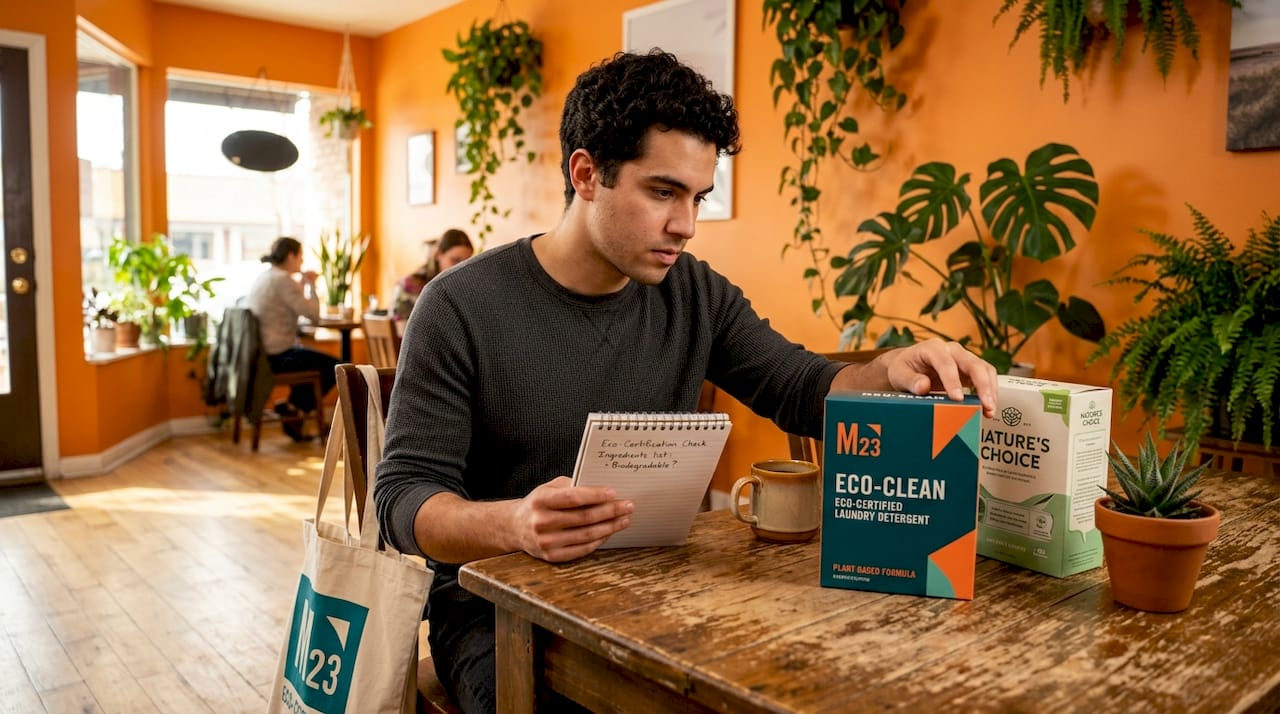
Market structures and lack of credibility are the primary barriers to sustainable product uptake, according to the World Economic Forum in 2026. Price signals, misleading labels, and fragmented standards make it genuinely hard to know whether a product lives up to its claims. Greenwashing is rampant. Without trusted frameworks, even motivated buyers get stuck.
Environmental trade-offs add another layer of complexity:
| Choice | Benefit | Potential trade-off |
|---|---|---|
| Plant-based diet shift | Lower GHG emissions, reduced mortality risk | Some substitutions can increase freshwater use |
| Local food sourcing | Lower transport emissions, fresher produce | Seasonal limitations in colder climates |
| Organic cotton clothing | No synthetic pesticides in production | Higher water use than conventional cotton in some regions |
| Energy-efficient appliances | Lower electricity bills | High upfront cost without prior insulation work |
The lesson is not that sustainable choices are futile. It is that they require calibration to your specific region, budget, and context.
“Sustainable consumption requires aligning economic incentives and consumer protection frameworks to close the intention-behavior gap.” — World Economic Forum, 2026
Trusted certifications help cut through the noise significantly. Learning how certifications guide purchasing reduces the cognitive load of every buying decision and builds the kind of confidence that actually changes behavior over time.
Practical steps to start investing now
Knowing why is only half the work. Here is a sequence that actually holds up when you apply it to real life:
Start with a consumption audit. Before you buy anything new, identify what you already own and what gets used. Most households contain enormous amounts of underused goods. Eating what is in your pantry, repairing worn items, and borrowing infrequently used tools are sustainable acts that cost nothing.
Follow the demand-reduction sequence at home. Fixing insulation and sealing drafts before purchasing new heating or cooling equipment avoids overspending and delivers better real-world savings. A new heat pump in a drafty house underperforms. The same pump in a well-sealed house transforms your energy bills.
When you do buy new products, evaluate them across their full lifecycle:
- Raw materials: Are they organic, recycled, or sustainably sourced?
- Manufacturing: Were fair labor standards applied? Is the factory location reducing transport emissions?
- Use phase: Is the product energy or water efficient during use?
- End of life: Can it be repaired, composted, or recycled rather than landfilled?
Evaluating eco-friendly products across these lifecycle stages, per Europe-Consommateurs 2026 guidance, consistently outperforms single-factor thinking like “it says organic on the label.”
Apply this thinking to fashion specifically. Clothing is one of the highest-impact consumer categories in terms of water use, chemical pollution, and labor exploitation. Choosing conscious clothing shopping habits that factor in origin, durability, and certifications compresses years of incremental improvement into a single shift in how you shop.
Pro Tip: When evaluating any purchase for sustainability, run it through three quick filters: Will I use this for at least five years? Can it be repaired? Do I know where it was made? If two out of three answers are yes, you are moving in the right direction.
The long-term value of investing in sustainability
Here is the frame that changes everything. Sustainability is not a cost center. It is a long-term investment in both personal and planetary health, and the compounding returns are real.
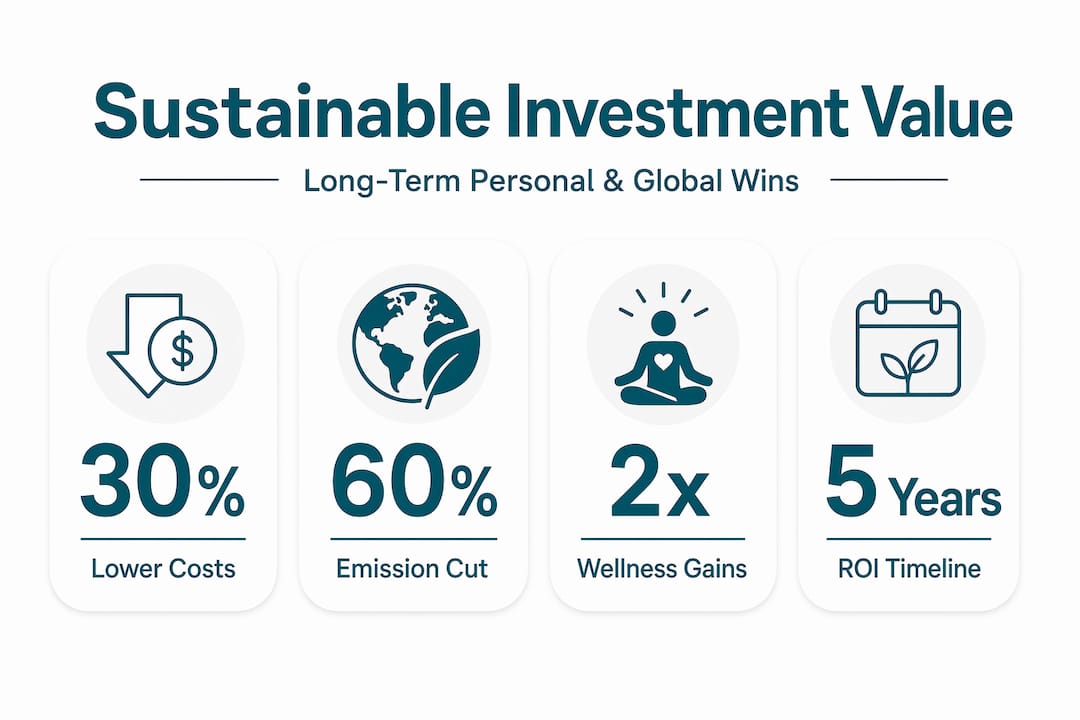
Dietary transitions alone, when adapted to regional food systems, simultaneously lower GHG emissions, reduce air pollution mortality, ease water scarcity, and cut household food costs. One set of choices producing outcomes across four categories simultaneously is not a small thing. It is an argument for systems thinking over single-issue optimization.
The individual and systemic levels reinforce each other. When enough people shift their purchasing and consumption patterns, market signals change. Manufacturers respond to demand. Governments notice. Retailers reconfigure their supply chains. The impact of sustainable habits at scale is not linear. It accelerates as adoption grows.
Your choices today create the material conditions for better options tomorrow. That is the actual investment thesis behind sustainable living.
My perspective on what this takes
I’ve spent years in sustainable fashion, watching people approach this the same way. They read about the benefits, get inspired, buy three organic products, and then stall. The problem is not motivation. It is the gap between inspiration and infrastructure.
What I’ve learned is that sustainable living works best when you treat it as a design problem rather than a discipline problem. Instead of relying on willpower at every purchase, you build systems. You identify the two or three categories where your spending and impact are highest and you focus there first. For most people, that is food, clothing, and home energy. Fix those three areas with intention and the rest follows more naturally.
I also believe the individual-versus-system debate is a false choice. Yes, systemic change is necessary. Corporate accountability, better labeling standards, and aligned price signals matter enormously. But waiting for systems to change before changing your own behavior is how nothing happens. You move, and the system eventually responds to enough people moving.
The most practical wisdom I can offer: stop trying to be perfectly sustainable and start trying to be consistently better. The benefits of sustainable living compound the same way a good investment does. Slow, steady, and worth far more than the initial cost over time.
— M23
Sustainable living starts with what you wear
Clothing is one of the most personal ways to invest in a sustainable lifestyle, and it is one of the most impactful. At M23, every piece is made from certified organic cotton or recycled materials at partner factories in Berlin and Poland where fair wages and transparent production are standard, not optional.

Whether you are updating your wardrobe with women’s sustainable apparel or looking for ethically made options for the whole family, M23 makes it straightforward to shop in alignment with your values. You can also explore the M23 blog for deeper reading on sustainable apparel trends in 2026 and how to build a wardrobe that holds up over time without environmental cost.
FAQ
What does investing in a sustainable lifestyle actually mean?
Investing in a sustainable lifestyle means deliberately choosing behaviors, purchases, and habits that reduce your environmental footprint while improving your long-term health and financial outcomes. It includes how you eat, shop, travel, and manage your home energy use.
Are sustainable products really worth the higher upfront cost?
Often, yes. Durable, ethically made goods tend to cost less per use over their lifetime than cheaper alternatives that wear out or need frequent replacement. Reducing total consumption first amplifies the financial benefit even further, according to 2026 European consumer guidance.
How do I know if a product is genuinely eco-friendly?
Look for reputable third-party certifications and evaluate products across their full lifecycle, including raw materials, manufacturing origin, use phase, and end-of-life options. Europe-Consommateurs 2026 guidance specifically highlights repairability and local sourcing as key indicators.
Can a plant-based diet really reduce my environmental impact?
Yes, with nuance. Research published in 2026 shows that plant-forward dietary shifts reduce GHG emissions and air pollution mortality, but some substitutions can increase freshwater use. Region-specific choices that match local food availability deliver the best combined outcomes.
Where is the best place to start with sustainable living?
Start with a consumption audit. Identify your three highest-impact categories (typically food, clothing, and home energy), reduce total consumption in each, and then substitute strategically using lifecycle thinking and certified products.